The third-place play-off between France and England and the final between Spain and Argentina are the only fixtures remaining, but the numbers already paint a picture of a tournament defined by attacking football, dramatic scorelines and a sharp contrast between the free-scoring group phase and the more cautious knockout rounds.
Argentina head into the final as the tournament’s leading scorers with 19 goals, followed by France on 16, England and Belgium on 14 each, Spain and Norway on 13 each, Netherlands and the United States on 11 each, Germany on 11 and Senegal on 10.
The group stage set the tone for a goal-heavy tournament
The opening phase produced the bulk of the tournament’s goals, accounting for more than 70 per cent of the total scored before the final weekend.
The 72 group matches produced 214 goals, with teams encouraged to attack under the expanded 48-team format.
Germany provided the tournament’s biggest statement in front of goal, crushing Curaçao 7-1 in a match that remains the highest-scoring fixture so far.
Canada also announced their attacking credentials with a 6-0 victory over Qatar, while Belgium, Netherlands, Sweden, France and Portugal were among the other teams to register emphatic victories.
The group stage also produced several entertaining draws, including Netherlands’ 2-2 stalemate with Japan, Iran’s 2-2 draw with New Zealand and Uruguay’s 2-2 encounter with Cape Verde.
Rather than producing a cautious opening phase, the expanded competition created more opportunities for teams to chase qualification through attacking football.
Knockout football slowed the scoring—but increased the drama
Once the tournament moved into the knockout rounds, the scoring rate dipped slightly as teams became more protective and the cost of mistakes increased.
The Round of 32 produced 42 goals from 16 matches, averaging 2.63 goals per game.
Belgium were the standout attacking side during that phase, scoring seven goals across their matches, including a 4-1 victory over the United States.
Argentina also maintained their attacking momentum, scoring six goals during the round.
The Round of 16 produced 23 goals, with three matches producing five goals each.
England’s 3-2 victory over Mexico, Belgium’s 4-1 win against the United States and Argentina’s 3-2 victory over Egypt were among the most entertaining knockout contests.
Quarter-finals delivered the highest knockout scoring rate
The quarter-finals bucked the trend of tightening games, producing 13 goals in four matches — an average of 3.25 goals per game.
Argentina were the biggest contributors, scoring three goals in their 3-1 victory over Switzerland.
Spain edged Belgium 2-1, England defeated Norway 2-1 and France overcame Morocco 2-0 to complete the semi-final line-up.
The stage showed that while teams became more cautious, the quality of attacking play remained high among the tournament’s strongest sides.
Semi-finals showed the pressure of reaching the final
The final four produced the lowest scoring rate among the knockout rounds.
Only five goals were scored in the two semi-finals, averaging 2.50 per match.
Spain reached the final with a 2-0 victory over France, while Argentina defeated England 2-1 in the other semi-final.
The reduced scoring reflected the stakes, with teams prioritising defensive organisation as a place in the final came within reach.
Argentina lead the attacking race heading into the final
Argentina’s 19 goals have made them the tournament’s most productive attacking side, with Lionel Messi emerhing the top scorer with eight goals.
Their scoring has been built around consistency rather than one explosive match, with goals spread across the group stage and knockout rounds.
France remain second with 16 goals, despite being held scoreless in their semi-final defeat to Spain.
England and Belgium have both scored 14, while Spain and Norway have reached 13.
The final between Argentina and Spain will therefore not only decide the champion but could also reshape the tournament’s scoring rankings.
The matches that defined the goal rush
Several games have stood out in a tournament where attacking football has dominated.
The highest-scoring match remains Germany’s 7-1 victory over Curaçao, while Canada’s 6-0 win over Qatar also ranks among the biggest victories.
The knockout stages produced their own memorable contests, with Argentina, England, Belgium and Mexico involved in some of the most dramatic encounters.
The tournament has also shown that high scoring has not always meant one-sided football, with several five-goal thrillers decided by narrow margins.
Two matches remain, but the numbers already tell the story
With the third-place play-off and final still to be played, the 2026 World Cup has already established itself as one of the most attacking tournaments in history.
The group stage provided the statistical foundation, while the knockout rounds delivered the pressure and unpredictability that define football’s biggest competition.
France and England can still add to the tally in the bronze-medal match, while Spain and Argentina have the final opportunity to influence the tournament’s final scoring records.
Whatever happens in the last two games, the numbers are already clear: the 2026 World Cup has been a tournament full of goals.



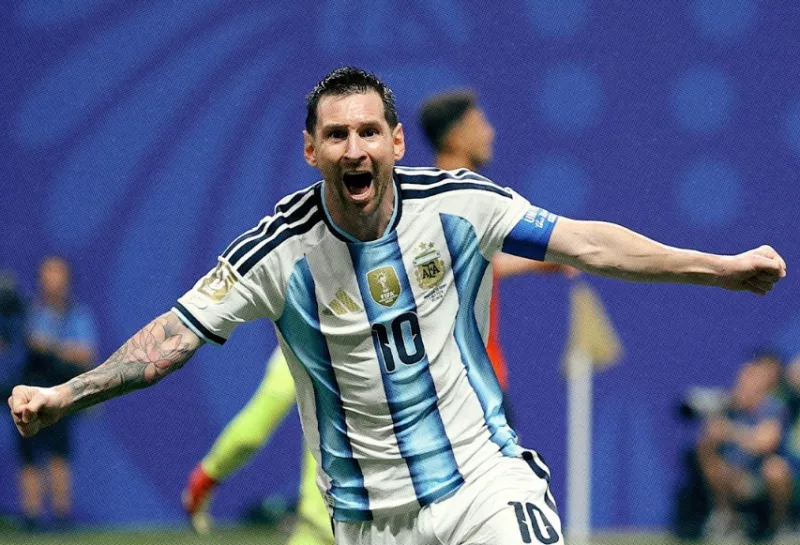 Argentina's Lionel Messi leads the scoreboard with eight goals ahead on Sunday's final against Spain.