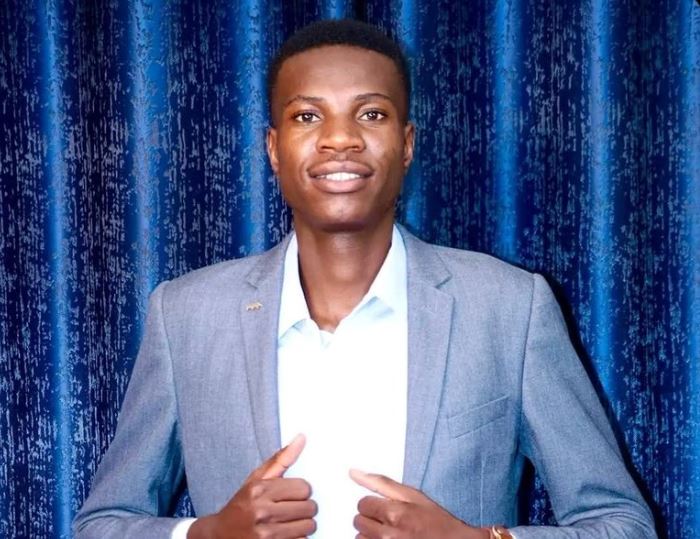
Dressed in an ill-fitting suit, a stuffed belly peeking
through his buttons and mimicking Gachagua’s deep accent and pacing speech, he
launched a brand of political satire that caught the attention of an entire
country.
That was the birth of Mr KK Mwenyewe, a character that
would soon make him a household name in the country’s digital comedy scene.
KK Mwenyewe was a student at Kisii University,
pursuing a degree in Computer Science.
But outside the classroom, he had a sharp ear for accents,
a love for current affairs and an uncanny ability to turn public figures into
satirical gold.
His breakthrough came during the early days of the
Kenya Kwanza administration.
Gachagua, just fresh into office, had become known for
his unusual phrasing and blunt statements.
KK saw an opportunity and seized it. He began
uploading short skits in which he played a fictionalised Gachagua, complete
with humorous rants and invented government briefings.
His version of Gachagua often gave awkward interviews
or stumbled over exaggerated political jargon, always with a serious face and
exaggerated gestures that made people laugh not just at him, but at the
realities he reflected.
The very first video that catapulted him to fame was a
parody of Gachagua addressing a supposed press conference on the high cost of
living.
He fumbled with statistics, defended the indefensible,
and waved his arms in true Gachagua fashion.
The video spread rapidly on TikTok and X. Within days,
he had gone from being a campus comedian to a viral star.
The reception was instant. He gained thousands of
followers and was even noticed by public figures, including Martha Karua, who
praised his creativity on social media.
Yet, even at the peak of his virality, KK’s story was
a reminder that fame and fortune do not always go hand in hand.
In October 2022, KK made a public plea for help to pay
his university fees.
He was short by just under Sh11,000, a modest amount
compared to the digital attention he was commanding.
His fans, including media personality Andrew Kibe and
Nairobi Governor Johnson Sakaja, stepped in.
Within hours,
more than Sh500,000 had been raised for him.
The moment became symbolic of both the power of online
community and the stark gaps that still exist for young creatives in Kenya.
KK never changed his style.
His content remained minimalist, just a phone camera,
his voice and a good idea.
That simplicity was part of his charm. He did not insult, curse, or rarely veer into personal attacks.
KK focused on capturing the mood, tone, and absurdity
of political speech.
Whether imitating Gachagua explaining fuel prices or
fictional presidential press briefings, he always left his audience somewhere
between laughter and reflection.
But behind the jokes, KK was also struggling.
Friends close to him say he had been unwell in the
weeks leading up to his death.
On Monday, July 14, 2025, he was admitted to Kiambu
Level 5 Hospital. He died while undergoing treatment. He was in his mid-20s.
His death sent shockwaves through the country’s
creative community.
One of the most heartfelt tributes came from Busia
Senator Okiya Omtatah, who described KK not just as a comedian but “a cultural
commentator and a brave young patriot.”
“Through satire and art,
Mr. KK courageously held a mirror to society, using humour not to divide, but to
awaken, educate, and unite. His ability to capture the political moment with
sharp wit and authenticity was both refreshing and powerful,” Omtatah said.
Zakaria “KK Mwenyewe” Kariuki is gone, but his skits
will live on.
Ultimately, he did not merely imitate a politician. He
captured a moment in the country’s history and gave it character.