

![[Understanding China] Feeding a nation: Insights into China's government-led food security strategy](https://cdn.radioafrica.digital/image/2026/04/0aa81c8e-4135-4b21-bb93-4c0d19488b30.jpg)
This is even as climate change, pollution, and environmental
degradation continue to threaten livelihoods across the globe.
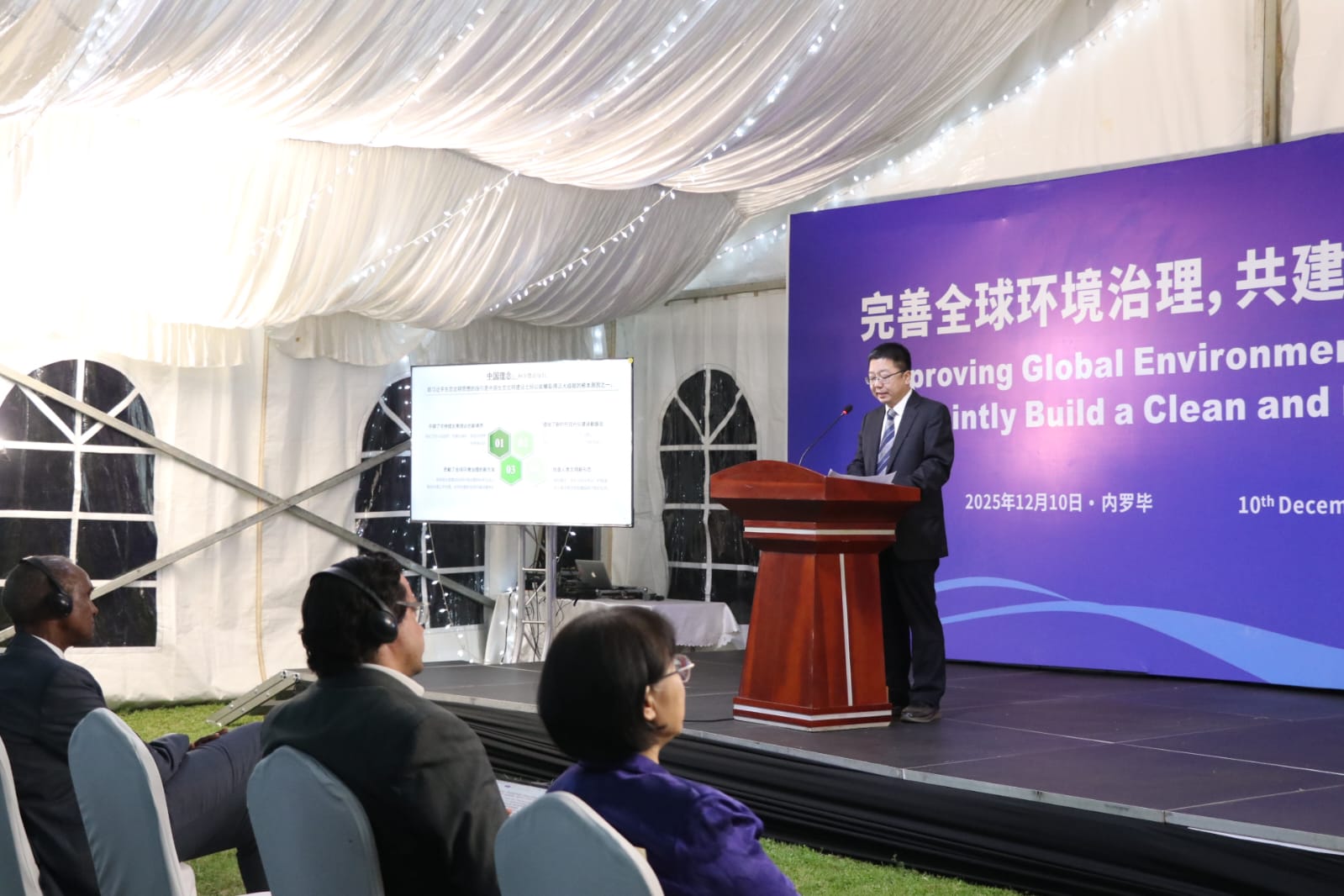
A new report by the National High-Level Think Tank of
China’s Xinhua News Agency and the Research Centre for Xi Jinping Thought on
Ecological Civilisation seeks to give direction on this important subject.
It argues that China’s ecological transformation offers
important lessons for the Global South on building a clean, beautiful, and
sustainable world.
The report outlines Beijing’s vision for global
sustainable development at a time when international cooperation on climate
action is threatened by geopolitical tensions, protectionism, and financing
gaps.
President William Ruto’s administration is pursuing
ambitious climate and green energy targets, yet grappling with deforestation,
drought, flooding, and rapid urbanisation.
The report presents ideas that resonate strongly with
the Kenya Kwanza administration’s own development aspirations.
Central to the Chinese approach is the argument that
developing countries must have a stronger voice in shaping global environmental
governance.
According to the report, all nations - regardless of
size or economic strength- should enjoy equal participation in global
sustainable development processes.
The report criticises what it describes as “growing
unilateralism and unequal representation within international environmental
systems”.
It posits that many developing nations remain
underrepresented despite bearing some of the harshest consequences of climate
change.
For Kenya, the call for stronger representation mirrors
long-standing concerns raised by African nations over climate financing and
access to green technologies.
African countries have repeatedly argued that although
they contribute minimally to global carbon emissions, they suffer climate-related
disasters more.
This is while struggling to access adequate funding for
adaptation and resilience.
The report also strongly advocates a “people-first”
approach to sustainable development, arguing that a healthy ecological
environment be viewed as a universal public good rather than a privilege
reserved for wealthy nations.
It warns against technological barriers and restricted access
to advanced green technologies needed by developing countries.
Kenya’s transition to clean energy and climate-smart
infrastructure often depends heavily on foreign financing, technology transfer,
and international partnerships.
While Kenya is among African nations leading in
geothermal and wind power, financing limitations continue to slow greening efforts.
The Chinese report argues that countries should remove
barriers to green development and promote the free flow of quality green
technologies, products, and innovations.
Nairobi has increasingly sought partnerships with China
in infrastructure, renewable energy, electric mobility, and digital
transformation projects.
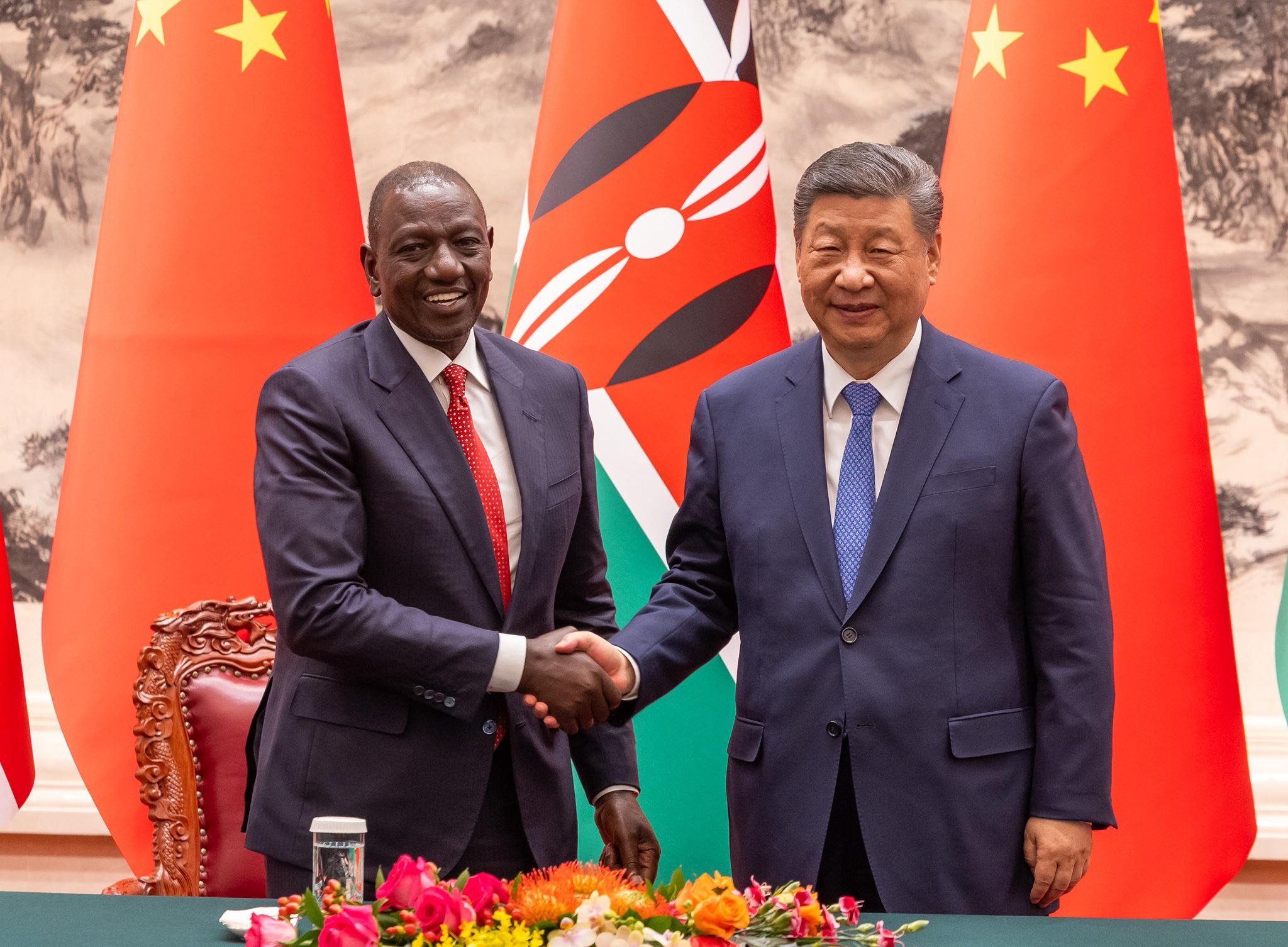
It is for this reason that President Ruto visited Fujian
during his official visit to China in April last year.
The report further stresses the importance of
multilateralism and respect for international law, holding that weak global
cooperation mechanisms could undermine climate action.
The report emphasises the principle of ‘common but differentiated
responsibilities.’
For Kenya and many African states, this principle remains
central to climate negotiations.
Developing nations have consistently argued that
industrialised economies should shoulder greater responsibility in supporting
global climate adaptation and mitigation efforts.
Beyond policy rhetoric, the Chinese document emphasises implementation and measurable action.
It notes that many global climate commitments remain
unfulfilled because of inadequate coordination, weak enforcement mechanisms,
and fragmented environmental governance systems.
“It is better to rise to act than to talk while seated,”
the report states, urging countries to adopt practical policies.
Audits have pointed out that Kenya’s ambitious climate
and environmental policies face implementation hurdles due to budget
constraints, institutional overlaps, and governance challenges.
Kenya has made notable progress in areas such as
renewable energy expansion, plastic pollution control, and forest restoration
initiatives.
However, experts say stronger enforcement, long-term
financing, and coordinated planning remain essential if the country is to
achieve its climate commitments and green growth ambitions.
The report also highlights China’s own transition toward
ecological civilisation, describing the coming years as crucial in achieving
the goal of building what it terms a ‘Beautiful China.’
Beijing says it intends to accelerate green and
low-carbon development through major investments in renewable energy systems
and pollution control.
It has also highlighted ecological restoration and sustainable
industrial transformation as a way out.
According to the report, China pursues integrated environmental
protection covering forests, rivers, wetlands, grasslands, farmlands, lakes,
and deserts while advancing carbon reduction and green production systems.
The document also points to plans to strengthen
ecological security barriers, expand green development capacity, and accelerate
the construction of modern energy systems.
For Kenya, whose economy remains heavily dependent on
agriculture and climate-sensitive sectors, such integrated approaches to
environmental management could provide valuable policy lessons.
The report concludes by arguing that no country can
tackle ecological crises alone and that cooperation among developing nations
will be essential in shaping the future of global sustainable development.
It foresees a future where green finance, digital
technology, and eco-industries flourish across the Global South, allowing
countries to grow without sacrificing environmental protection.
The report’s central message - that ‘lucid waters and
lush mountains are invaluable assets’- points to China’s belief that
environmental conservation and economic prosperity are not mutually exclusive.
The Chinese model may offer inspiration and practical
lessons on how developing countries can pursue modernisation while safeguarding
the environment for future generations.