It began with an act of compassion.
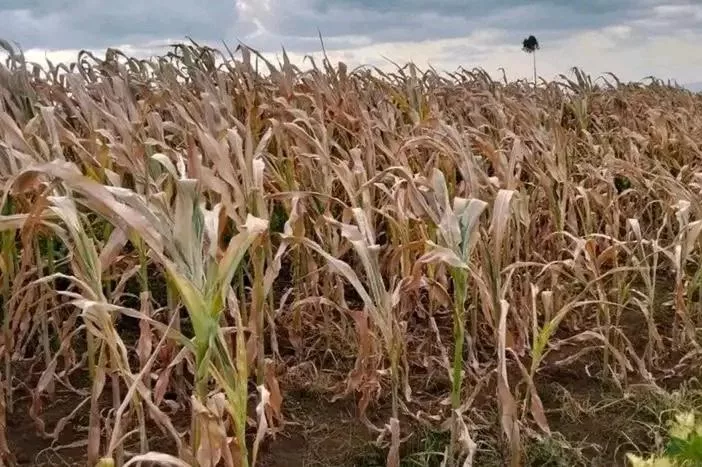
During one of the region’s devastating droughts, Mama Abdia
Ali Ibrahim rescued the vulnerable bird and took it into her home. She named it
Asha and, over the next year, raised it as if it were one of her own children.
“I named her Asha and raised her from when she was young,”
Mama Abdia said in a video shared online and translated from Somali.
What started as an act of compassion gradually became
something much deeper.
The ostrich ate what the family ate, lived alongside them
and grew into an inseparable part of the household. Seeing the towering bird by
Mama Abdia’s side became an unusual but familiar sight in the community, while
videos of the pair spread across social media, captivating thousands of
Kenyans.
“I love her the same way I love my children,” Mama Abdia said.
For many, Asha was no longer simply an ostrich.
She had become family.
Yet while thousands of Kenyans saw a woman caring for an
animal she had rescued, the law viewed Asha first and foremost as wildlife, a
distinction that would ultimately shape what happened next.
The question; where does compassion end and legal
responsibilities begin?
Under the Wildlife Conservation and Management Act, wildlife
is held in trust for the people of Kenya and managed by the State through the
Kenya Wildlife Service (KWS). The law provides wildlife user rights, including
regulated activities such as game farming and ranching for certain species,
including ostriches.
However, rescuing and raising a wild animal does not
automatically confer ownership or the legal right to keep it. Anyone wishing to
keep wildlife must first obtain the necessary approvals and licences from KWS.
Although ostriches can legally be kept in Kenya, they are
not treated as livestock. They remain wildlife and may only be kept under
KWS-approved wildlife user rights and licensing arrangements.
The story took a turn when KWS came knocking on Mama Abdia’s
door.
Images of Mama Abdia breaking down in tears during the
handover quickly circulated online, prompting a broader conversation about
whether Kenya’s wildlife laws strike the right balance between compassion,
conservation and community stewardship.
Online, opinion quickly split. Many sympathised with Mama
Abdia, arguing her compassion deserved recognition after she rescued and cared
for the bird through one of northern Kenya’s harshest droughts.
Others defended
KWS, saying however emotional the story, ostriches remain wild animals
whose welfare is best served in environments where they can live among their
own species, breed naturally and receive specialised care.
Mama Abdia on the other hand, was sad to let her feathered
friend go, but believed Asha had reached a stage where she needed more care.
“I’m sad to see Asha go,” she said. “But she’s grown now and
needs somewhere she can receive better care.”
That sentiment reflects the difficult balance at the centre
of the debate.
Could there have been another way?
Former Kenya Tourism Federation chairman Mohammed Hersi thinks so.
“I do not dispute that wild animals ultimately belong with
their own kind, in spaces where they can breed and roam freely,” Hersi said.
However, Hersi argued that Kenya’s existing wildlife
licensing framework could have offered an opportunity to explore whether Mama
Abdia could legally continue caring for Asha under regulated conditions instead
of immediately removing the bird.
“Kenya already has a licensing pathway for exactly this kind
of relationship between citizens and wildlife,” Hersi said.
“We should be using that pathway to reward communities who
step in when nature fails, not simply reclaiming what they built with their own
hands and hearts.”
Hersi’s comments reflect one perspective in the wider debate
emerging from Asha’s story, not whether wildlife should be protected, but
whether Kenya’s existing licensing framework could, in exceptional
circumstances, do more to recognise citizens who rescue and responsibly care
for vulnerable wildlife while still safeguarding conservation goals.
There are no easy answers.
Long before Asha became the centre of a national debate, she
was simply the orphaned chick Mama Abdia rescued during a devastating drought.
To the law, Asha was wildlife.
To Mama Abdia, she was family.

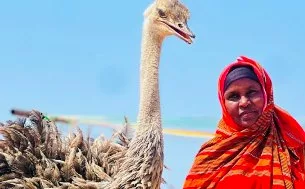 Mama Abdia with Asha the ostrich /HANDOUT






![[PHOTOS] Elderly brave cold to vote in Ol Kalou](https://cdn.radioafrica.digital/image/2026/07/d2345b9e-578f-45ff-9bb0-d7819671c165.webp)

![[PHOTOS] Ol Kalou residents turn out in large numbers to vote](https://cdn.radioafrica.digital/image/2026/07/fe42d51c-7f79-466e-94e8-59561f77bbe7.webp)