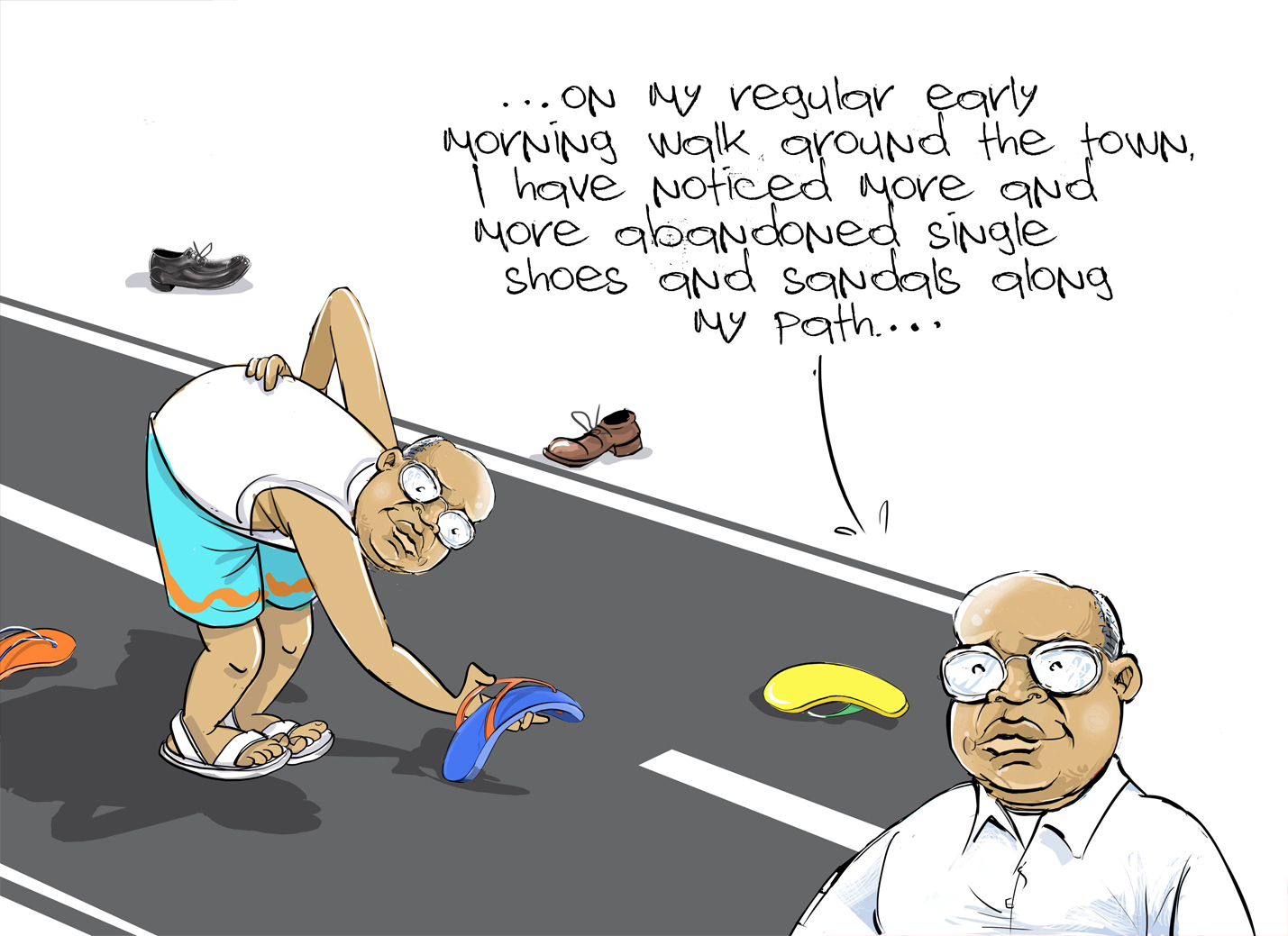
G-SPOT: The curious case of Malindi’s lost soles
A festive footwear phenomenon baffles the mind
7mon agoMwangi GithahuSasa
The city has become an open-air laboratory for structural improvisation


Audio By Vocalize
In between, we are treated to a familiar mockery of paperwork stamped with enthusiasm, inspections conducted with exceptional speed and buildings that stand just long enough for tenants to unpack before gravity remembers its job description.
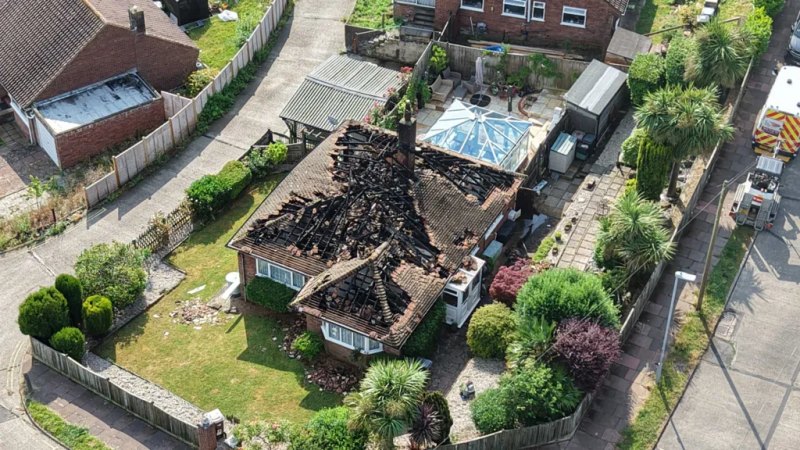
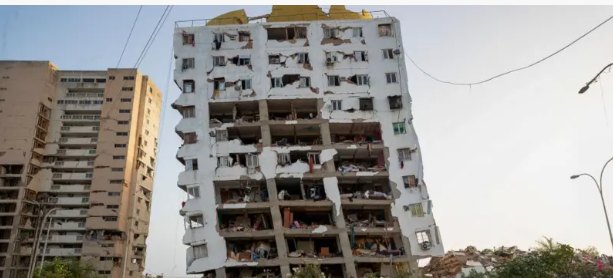
The latest act in this long-running farce played out in South C, where a building collapsed with the subtlety of a punchline delivered by a wrecking ball. Yet again, we have been reminded that concrete has a macabre sense of humour, and it laughs last.
The official response followed the script with comforting predictability: expressions of shock, solemn promises of investigations and the reassurance that lessons will be learned, presumably by future victims.
We’ve seen versions of this movie before. In July 2007, when earthquakes and tremors from Tanzania rattled Nairobi, the Architectural Association of
Kenya politely warned that the country’s lack of building law enforcement was a problem. The warning was noted, filed and probably decorates a drawer.
Nineteen years later, the tremors have yet to return, but for now have been replaced by collapses. These are far more convenient because they do not require geological explanations. Human negligence is cheaper and easier to source.
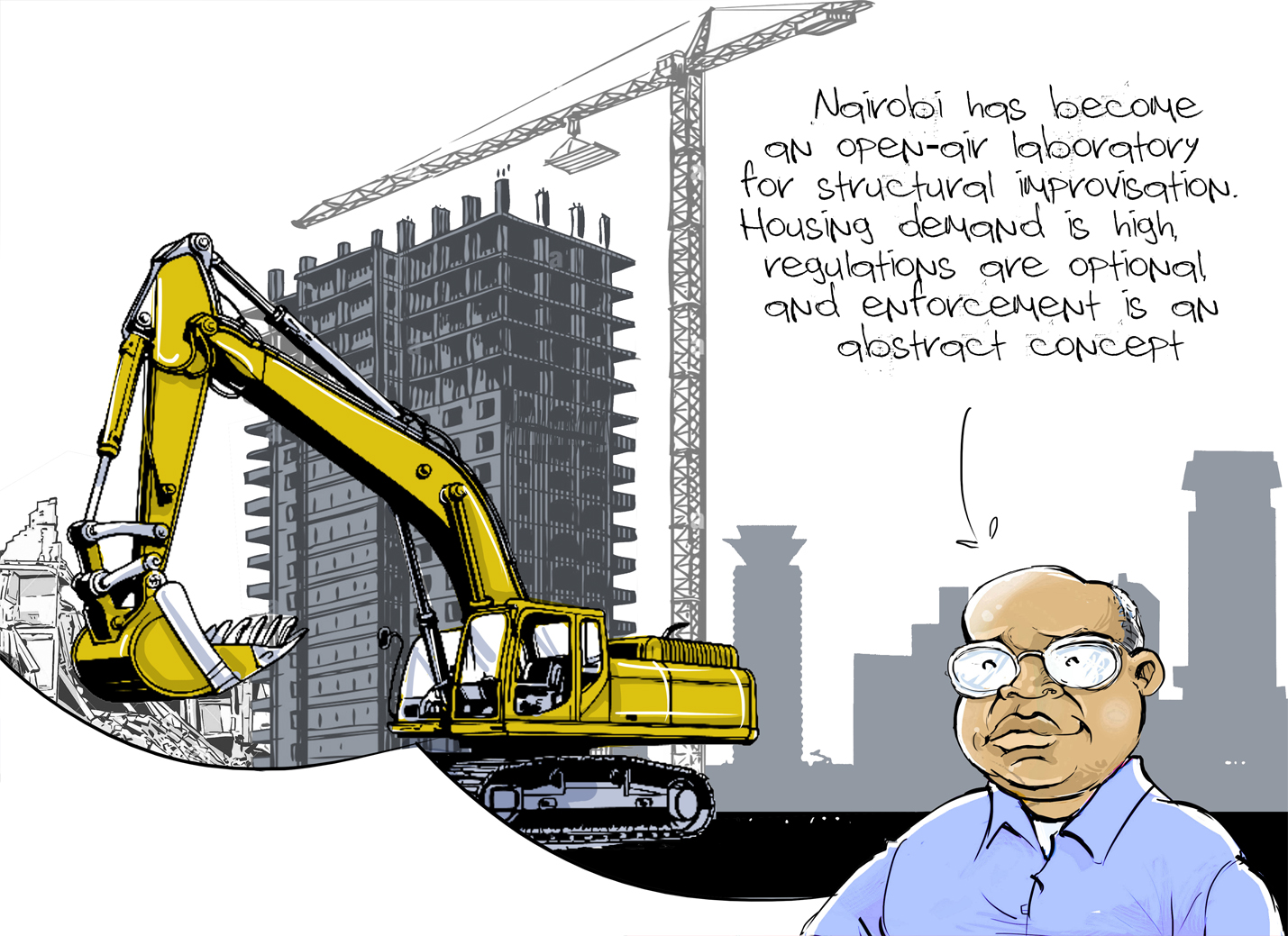
Nairobi has become an open-air laboratory for structural improvisation. Housing demand is high, regulations are optional and enforcement is an abstract concept discussed mainly at conferences.
In 2018, the National Construction Authority conducted an audit and found that more than half of the city’s buildings were unfit for habitation. This should have caused alarm. Instead, it seems to have inspired confidence. If half are unfit and still standing, why worry about the rest?
The years since have provided a steady supply of evidence. In 2019, a residential building collapsed in Nairobi, killing at least three people.
Three months earlier, seven children died when their school was flattened, a tragedy blamed on construction so poor it would have embarrassed a sandcastle.
In 2022, a six-storey building came down in Kirigiti, killing five more. In October 2024, an eight-storey residential block collapsed in Kahawa West, despite having been condemned for demolition. It had been built and occupied without approval, proving once again that rules are merely suggestions for the imaginative.
Now South C joins this grim roll call. Those affected will carry the memory for the rest of their lives. Families will measure time as before and after. For them, this is not satire. It is loss, trauma and a permanent absence.
The rest of us, however, are invited to enjoy the spectacle of accountability theatre. The blame game is already in full swing. Inspectors will blame developers. Developers will blame contractors. Contractors will blame the soil. The soil, unfairly maligned, will remain silent.
Somewhere in this choreography, the public will be assured that investigations are underway, that processes will be reviewed and that a report will be issued at an unspecified future date, ideally after attention has moved on.
Transparency is, of course, promised. Kenya is fond of invoking the Singapore model minus the inconvenient bits about enforcement and consequences. If we are serious about becoming a capable, ethical, developmental state, then the investigation into the South C collapse must be conducted in full view of the public. Kenyans deserve to know who signed what, who inspected what and who looked the other way.
Early indications suggest systematic failure across multiple levels of oversight, coupled with non-compliance and mismanagement. In other words, business as usual.
At the end of this process, as always there will be recommendations. They will speak of quality assurance, improved transparency and enhanced enforcement efficiency. They will be printed, circulated and forgotten, while the next building quietly prepares its own dramatic exit.
What must change is the assumption that no one will be held responsible. There should be no sacred cows, no evasive manoeuvres, no obstructive behaviour masquerading as due process. Obstructing accountability should have consequences, not footnotes. Lives have been lost. Reputations, such as they were, deserve to be tarnished if negligence played a role.
The chaos, death and destruction in Kenya’s built environment are not a laughing matter, even if the system insists on performing as a tragic comedy.
A festive footwear phenomenon baffles the mind
Cape Town flies contest winners in on a helicopter