Let me begin with a confession: I am exhausted. Exhausted by a
Kenyan presidency that treats justice like a discretionary budget line.
Exhausted by a state that can find billions for the victims it chooses to see,
but not a single shilling for those it spent decades trying to erase. And
exhausted most of all by the silence of those who should know better.
President William Ruto has allocated Sh2 billion to
compensate victims of recent protest-related violence. On its face, this is
a necessary gesture.
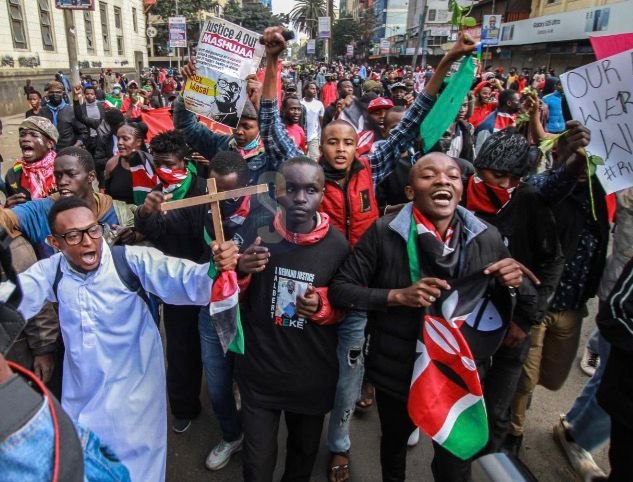
Young men and women were shot, abducted and brutalised by
security forces while exercising their constitutional right to demonstrate.
Their pain is real. Their families deserve redress. I say this without
qualification.
But here is the wound that festers beneath the headline, ignored by
State House and the chattering class of Nairobi: The Wagalla Massacre remains
unpaid for, unprosecuted and unacknowledged as a crime against humanity.
Let me take you back. On February 10, 1984, a date seared into the
memory of every Somali‑Kenyan, the Kenyan
state, under President Daniel arap Moi, unleashed hell on the Degodia and Garre
communities of Wajir county.
At Wagalla airstrip, thousands of men were rounded
up under military orders.
They were stripped naked in the scorching heat, searched for weapons
that did not exist and then systematically executed over several days.
Survivors, now elderly men with trembling voices, speak of soldiers laughing as
they fired into packed hangars.
They speak of helicopters strafing fleeing men from the air. They
speak of bodies left to rot under the sun, eaten by hyenas because the state
refused to claim its dead.
Official estimates from the TJRC report suggest 5,000 dead.
Survivors and their descendants insist the number is closer to 10,000. But the
true horror is not the arithmetic. The true horror is that no one has ever been
held accountable.
Benson Kaaria, the former Northeastern Provincial Commissioner and
last surviving mastermind of that atrocity, died last year at 91 years old. He
never spent a single night in a cell. He never testified before a public
tribunal.
He never issued an apology. He retired with a full pension, aged in
comfort and died with his boots clean and his conscience, if he ever possessed one, utterly undisturbed.
He ordered the roundup. He signed the directives that sent hundreds
of men to their graves. And the state rewarded him with a quiet death and a
dignified burial.
Meanwhile, apart from the Truth, Justice and Reconciliation Commission
(TJRC) report, a document that cost Kenyan taxpayers millions and was
subsequently thrown into the parliamentary dustbin, no proper inquest has ever
been conducted.
Not one prosecution. Not one exhumation of the mass graves that
local elders can still point to. Not one official monument with the names of
the dead. Not even a formal apology from any sitting president.
And now President Ruto commits the same sin as his predecessors: the
segregation of Kenyans into the valued and the unimportant.
Let me name this sin directly because subtlety has failed us. The
presidency has decided that protest victims – largely urban, largely connected to
digital activism, largely visible to international media and human rights
cameras – deserve compensation.
But the pastoralist men of Wagalla, murdered
40 years ago in a remote airstrip that no foreign journalist ever visited,
are deemed historical noise.
Their descendants still live in internal displacement camps within
their own ancestral lands. They still carry identity cards carrying vestiges of
the old provincial administration system that marked them as second‑class citizens.
They still beg for water and pasture while Nairobi
politicians fly overhead in helicopters heading to political rallies.
This is not governance. This is a caste system dressed in
constitutional clothing.
So let me be unequivocal: President Ruto must rescind this
segregationist approach immediately. If he does not, we will have no choice but
to pursue legal action against him. The social contract is not a matter of
presidential benevolence.
It exists in statutes, regulations, and binding international
instruments that Kenya has ratified, including the International Covenant on
Civil and Political Rights.
The state cannot pick and choose which massacre to
compensate based on political convenience or ethnic arithmetic.
And while we are speaking of selective justice, let us widen the
lens further because the rot runs deep.
Where are the families of murdered political leaders? Josiah Mwangi Kariuki was shot and his body burned after he dared to ask where the country's
wealth went.
Dr Robert Ouko, whose body was found charred at Got Alila after he exposed
corruption at the highest levels of the Moi regime. Father Anthony Kaiser, who was silenced
for speaking truth to power.
Chris Msando, the Independent Electoral and Boundaries Commission ICT manager tortured and murdered just before
the 2017 election, whose body was found with clear signs of state involvement.
Dr Mbae, who was killed under circumstances that the state has never fully explained. Other names in this tragic ledger include Pio Gama Pinto and others whose only
crime was demanding accountability.
Their families watch as the President writes a cheque for Sh2 billion for
one set of victims while their own loved ones' files gather dust in the Office
of the Director of Public Prosecutions. That is not justice. That is
performance. That is the theatre of impunity dressed up as reform.
We cannot have a country where the presidency wakes up each morning
and decides what is right and what is wrong based on who voted for whom. The
social contract is not a suggestion.
It is binding. It lives in our constitution, our statutes, our regulations and our collective conscience as a
people who swore "never again" after Wagalla, after the post‑election violence, after every state murder we have chosen to
forget.
Therefore, I call upon every political leader from Northeastern Kenya, and every leader of conscience from every corner of this nation, to avail resources
to pursue the Wagalla Massacre compensation process. Not as a favour. Not as a
tribal entitlement. Not as a bargaining chip in coalition negotiations. But as
a constitutional obligation and a moral necessity.
If Ruto can find Sh2 billion for protest victims, he can find equal
funds for Wagalla. If he can appoint a task force for police reforms, he can
appoint a special tribunal with prosecutorial powers for the 1984 atrocities.
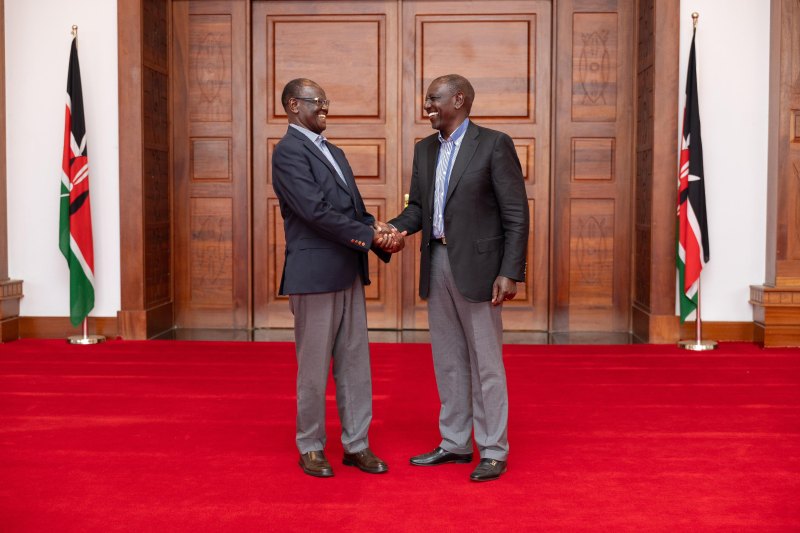
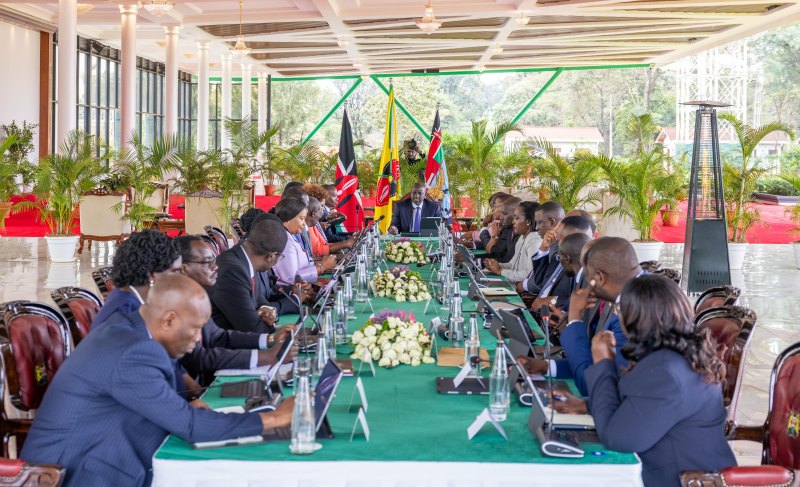
If he can meet with Azimio leaders at State House, he can meet with the Wagalla
survivors—those who still walk this earth with bullets inside their bodies and
nightmares inside their heads.
Otherwise, let us call this what it is: a two‑tier justice system where the value of a Kenyan life depends
entirely on the postcode of their suffering and the ethnicity of their face.
We will not accept that. Not in 2024. Not in any year under any
president. The truth has been buried for 40 years. The dead have waited four
decades for a whisper of acknowledgement.
But the dead do not forget. And neither will we.
Human rights advocate and governance commentator