


So you are earning your own money now. Maybe it's a salary that grows a little each year. A business you built from nothing. A side hustle that's slowly becoming the main thing. You are doing better than your mother ever did, and you know it.
But the responsibilities have grown just as fast as the income. There’s rent or a mortgage, school fees, food, a parent who now depends on you, a business that needs reinvesting in. By the time everything is paid, saving feels like something other people get to do. Investing feels riskier still, and you've heard enough stories of people losing money to stay parked in what feels safe. And somewhere in the back of your mind sits a question you keep postponing: What happens to everything you're building if something happens to you?
You're not alone in this. At a recent Absa Kenya webinar, a real-time poll found that limited income stacked against high responsibility is the number one reason Kenyan women give for not building wealth, with fear of investment risk close behind. More telling: 51 per cent of the women polled had no will or estate plan at all, even though 36 per cent admitted they'd thought about getting one.
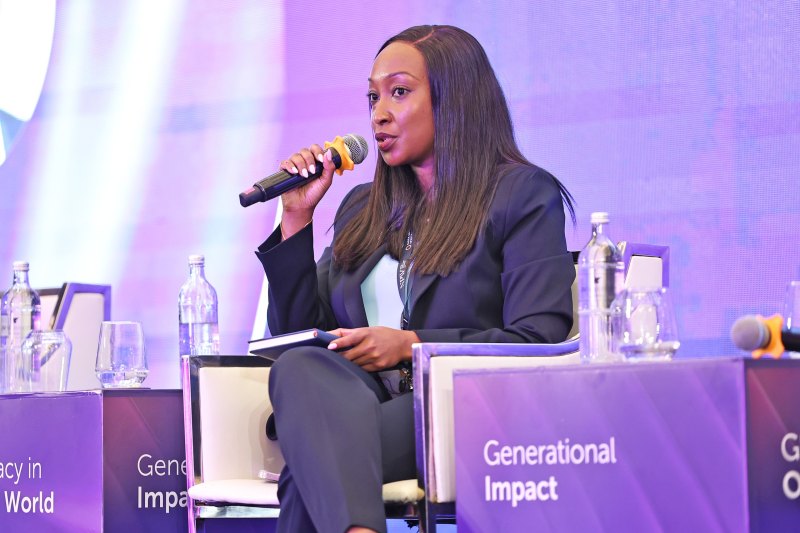
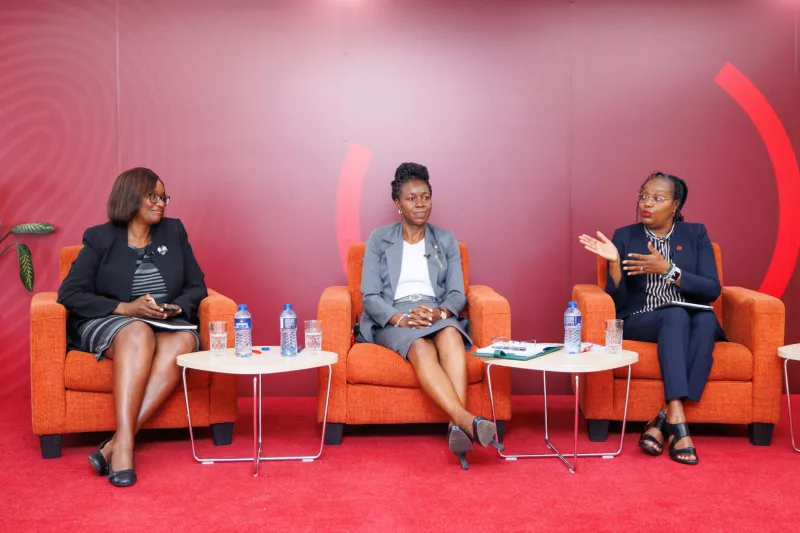
To help you close that gap, we put your questions — the ones you're actually asking — to three financial experts who spend their careers inside this exact problem: Elizabeth Irungu, CEO of Absa Asset Management Ltd; Julia Shisia, executive director at Absa Bancassurance; and Gladys Mboya, managing partner at Mboya Wangong'u & Waiyaki Advocates.
BUILDING WEALTH
Q: When we say ‘wealth’, it sounds like something for the ultra-rich. What does it actually mean for someone like me?
Elizabeth Irungu: Wealth isn't a status. At its core, it's simply your comfort and the ability to live securely, without constant financial anxiety, at whatever level you're operating. A total of 72 per cent of Kenyan women are now economically active. If you're earning anything, you're already on the journey.
Q: I feel like my income is entirely swallowed by responsibilities. How do I even start saving?
Irungu: Pay yourself first. It sounds cliché, but it's non-negotiable. Studies show most people cannot account for at least 30 per cent of what they spend. That’s silent leakage. Audit it, plug it then automate at least 20 per cent of your income into savings before you ever see it.
Q: Everyone I know has a Money Market Fund. Isn't that enough?
Irungu: An MMF is a parking bay, not a final destination. Interest rates are capped, so you can't get exponential growth from one alone. In 2025, MMFs returned around 9 to 10 per cent, while the Absa Equity Fund returned 40 per cent. Split your money: MMF for emergencies, equities for growth. Take risks to grow.
Q: My parents built their whole life around land. Was that wrong?
Irungu: They did well to invest but the mistake was in not diversifying. Many are now in their 70s and 80s, asset-rich but cash-poor, with no liquid income. Draw a pie chart of your own money: all property, and you're illiquid. All MMF, and you're too conservative. All stocks, and one crash wipes you out emotionally and financially. Aim for a balanced portfolio that blends all three.
Q: Should I be moving money offshore, like everyone did when the shilling weakened?
Irungu: Be careful. When Zambia's currency crashed, everyone rushed into dollars, which neared 40 to the Kwacha. Today that rate has swung back to 18 or 19, and anyone heavily offshore is sitting on losses, and still needs local currency to pay school fees at home. Hold a calculated balance of both, not a bet on either.
Q: Debt feels like it's choking me. How do I get out?
Irungu: Audit it with candour and identify your most expensive debt first. Commercial banks offer the cheapest, most regulated credit in the market; mobile app loans are often the most expensive. Use a bank loan to buy out costly Microfinance Institutions or digital loans debt, or extend your repayment tenure to free up monthly cash. And look at your own earning power; a second skill or hustle changes your debt-to-income ratio fast.
Q: I always thought only land could be used as collateral for a loan. Is that true?
Irungu: No, and this is a tool many women miss. You can place a lien on liquid assets — your MMF, government bonds or an offshore portfolio — to secure financing, then pledge the earnings from that investment to service the new loan. Hold a bond earning 12 per cent, and a bank can lend you up to 80 per cent of that value against it. Your existing wealth quietly funds your next asset.
PROTECTING WHAT MATTERS
Q: Insurance penetration in Kenya is just 2.4 per cent of GDP. Why should I prioritise it if I'm already stretched?
Julia Shisia: As women, we're almost always the anchor of our ecosystem — parents, children, business, career. But we rarely ask "what if?" I lost my husband in November. School fees were due in January. His accounts and property were frozen under probate. The only thing that paid the fees within 10 days was his insurance policy.
Q: What should my top insurance priorities actually be?
Shisia: Three things. Health insurance first, it’s non-negotiable; for you, spouse, children and your parents. Education policies second, which you can start at even Sh2,000 a month. If the paying parent dies, the insurer waives future premiums and the policy keeps running to fund university. Third, shelter and income protection, including retrenchment cover, which can pay six to nine months of salary if you are laid off, is increasingly relevant as AI reshapes the job market.
Q: I run a small business. How does insurance protect what I’ve built?
Shisia: I handled a case of a trader whose entire kibanda burned down in a market fire. She'd been paying about Sh1,000 a month in premiums. Her insurer paid her Sh200,000 within 48 hours. She restocked immediately; her children didn't miss a day of school. That's the power of a micro-premium. For bigger businesses, Keyman Insurance funds a replacement hire or buys out a deceased partner's shares so the company survives.
Q: What about cover for something more serious, like a critical illness or being unable to work?
Shisia: That's where Income Replacement and Critical Illness Cover come in. If you are employed and face an unexpected layoff, a retrenchment cover can step in to pay your full salary for six to seven months, giving you a vital buffer to find your next move without slipping into financial ruin. This also comes in if you are temporarily disabled or bedridden, so your income stays intact while you recover. Critical Illness Cover pays a lump sum — say, Sh3 million on a Sh10 million policy — the moment you get a first diagnosis for something like cancer, so treatment doesn't force you to liquidate the wealth you've spent years building.
SECURING YOUR LEGACY
Q: If my husband and I own our home jointly, does that automatically skip the whole probate process?
Gladys Mboya: Only if it's worded precisely. Many Kenyan title deeds read "Mr and Mrs Kamau" without the word "jointly". The law then presumes a strict 50-50 split, and one spouse's share still goes through full probate if they die. Add the word "jointly" and the property passes to the survivor on presentation of a death certificate alone. Bank accounts need the same explicit survivorship clause.
Q: What's the real difference between a will and a trust?
Mboya: A will only takes effect after you die, and once in probate, becomes a public document. A trust is a separate legal entity; transfer your property or shares into it, and you no longer personally own them, the trust does. That protects the assets from creditors and lets minor children, who can't legally own property in Kenya, inherit through trustees without court interference.
Q: Do I have to be older or wealthier before I think about a trust?
Mboya: Not at all. You can start estate planning at 18, with no wealth threshold. You can even build a trust directly into your will, naming someone you trust to hold an asset for your child until they come of age.
THE PARTING SHOT
Building wealth in Kenya today means moving from a passive saver to a deliberate, diversified investor. “Leave a legacy, not a burden or a battle for your children,” Mboya says. “Plan and protect what you have, and start today,” Shisia adds. “This will save you when the cows are thin.”
None of this requires wealth you don’t yet have, according to Seema Dhanani-deSouza, the director of affluent Banking at Absa Bank Kenya.
“The first step into an MMF costs as little as Sh1,000. What it requires is starting today,” she says.