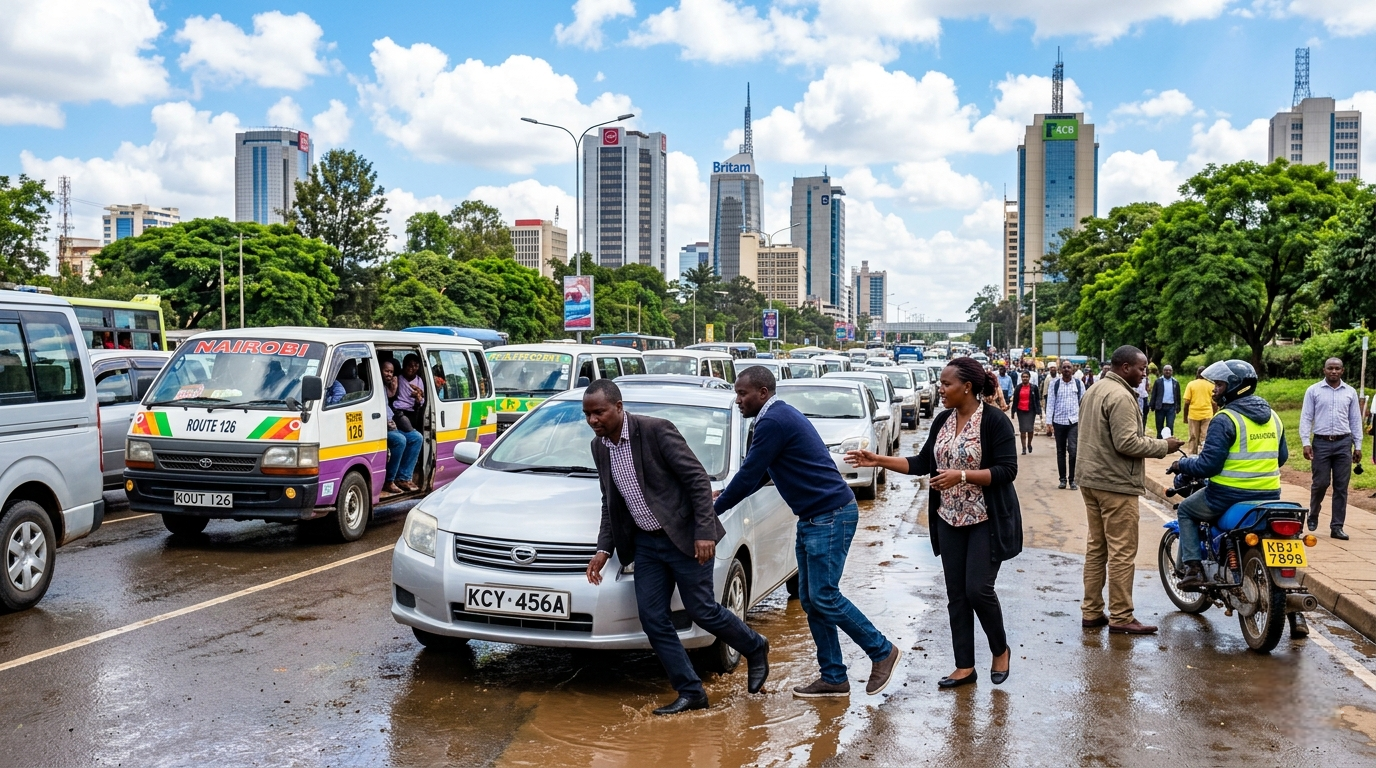



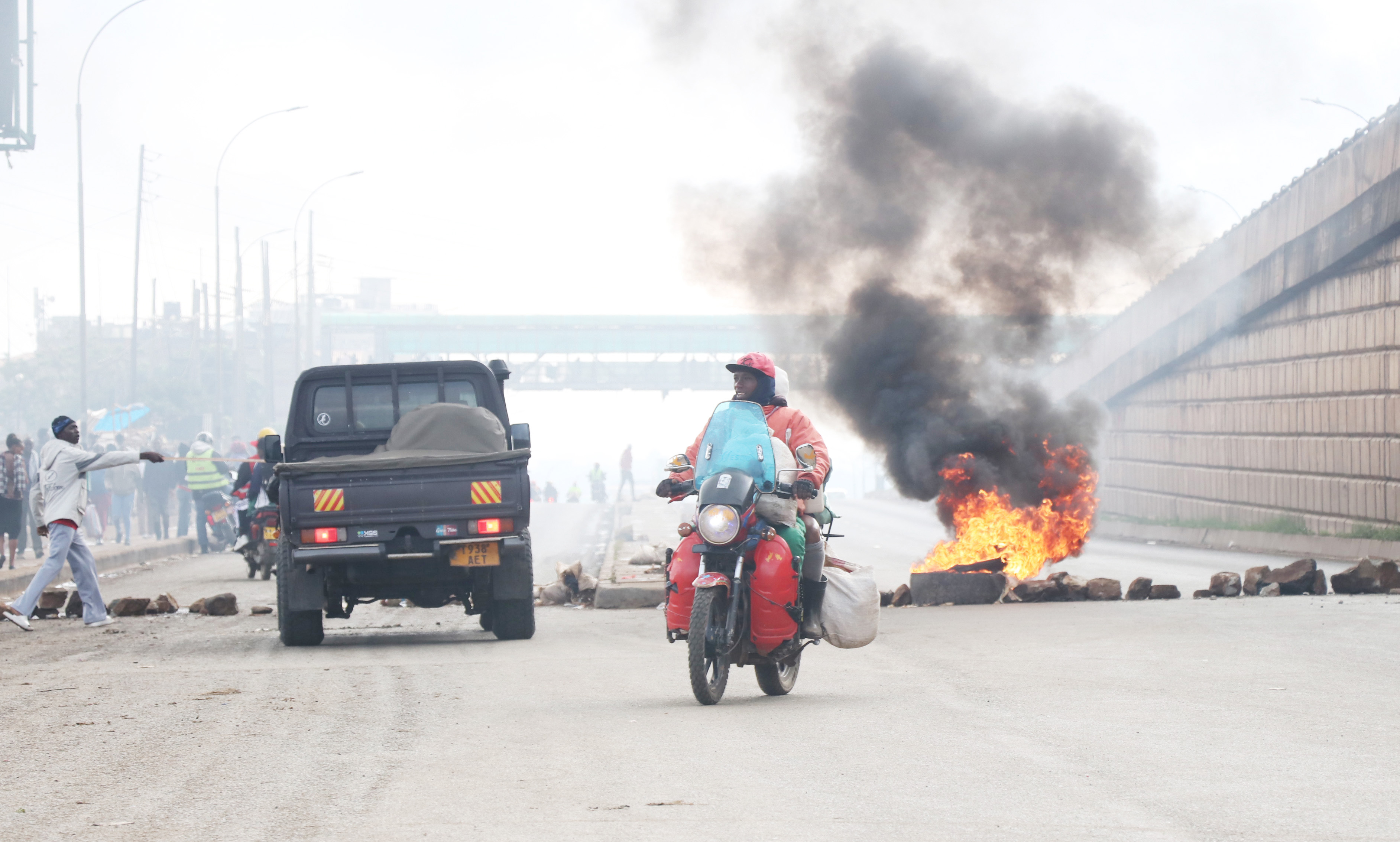
What we witnessed during the matatu strike was not governance. It was a political circus. Government officials, led by Energy CS Opiyo Wandayi, stood before cameras and announced what they presented as a negotiated resolution with matatu operators.
Except it wasn’t.
Because even as the announcement was being made, stakeholders in the same room were already disputing key parts of that so-called agreement in real time. On live television, in front of the country.
So the question is not whether there was miscommunication. The question is why the government thought it could announce a deal that had clearly not fully held together and still expect reality to politely rearrange itself afterwards.
That is not governance. That is performance.
Performance built on the assumption that Kenyans are unserious people with short memories. That citizens will hear an announcement, absorb the confusion, argue online for two days, then eventually surrender to exhaustion and move on to the next crisis.
But Kenyans are no longer passive spectators, and that is exactly what this government still does not understand.
Because what happened during the matatu strike is not an isolated incident. It is part of a much larger pattern. A political culture where certainty changes shape depending on who is speaking, where they are speaking from, and what they need from the public at that particular moment.
The clearest example begins with President William Ruto himself. There is a televised interview with Yvonne Okwara where William Ruto, then Deputy President, breaks down fuel pricing in textbook terms. The explanation is direct: reduce taxes and look for alternative sources of revenue to ease the burden on households already stretched to the limit. At the time, taxation was clearly presented as a central driver of the rising cost of fuel and, by extension, the cost of living.
Then there is another clip from a political rally in 2022. In that moment, William Ruto — still Deputy President — dismisses the idea that global shocks like the Russia-Ukraine war could be used to explain rising fuel prices. Instead, the focus turns inwards: state capture, oil marketers, cartels, corruption, conflict of interest and entrenched networks benefiting from inflated prices. He even points to Uganda’s cheaper fuel as evidence that Kenya’s problem was not global but structural and domestic.
Yet today, the explanation has expanded outwards. International price fluctuations now matter. Geopolitical instability now matters. The same external forces the President once dismissed as excuses have become central pillars in explaining the very same pressures on fuel prices and the cost of living.
But fuel did not reorganise itself around election cycles. Global markets did not suddenly become more influential when leadership changed. International crises did not begin responding to domestic political timelines. Only the explanation changed.
And that is where the tension sits.
Because in the period of his leadership, taxes have increased significantly. The cost of living has continued to rise. And ordinary Kenyans are left asking a simple question: Where are the solutions that were promised?
The clarity that once diagnosed the problem now feels distant from the reality people are living through. And what remains is a widening gap between what was said with certainty then and what is being experienced now.
That gap is the story. Not fuel prices alone, not matatu strikes alone, but a pattern that keeps repeating itself until it becomes impossible to ignore.
A political culture that speaks in certainty when certainty is useful, and reaches for complexity when clarity becomes expensive. Words that arrive polished for effect in one moment, then are carefully rearranged in another, depending on what needs to be defended.
And Kenyans are no longer receiving it passively. They are reading it the way you read something you have already seen before and know how it ends. They are listening, but also remembering. They are measuring today’s explanation against yesterday’s confidence, and noticing how often the shape changes in between.
What once sounded like leadership now feels like timing. What once sounded like conviction now feels conditional. The same issues, the same pressures, but different explanations, depending on the moment they are spoken into.
And in that repetition, something has shifted.
Political language no longer stands on its own. It carries a history now,
whether it wants to or not.
And once that happens, words are no longer just words. They become questions of accountability.