



My friend handed in her resignation letter last week. She has just had it.
There wasn’t a dramatic announcement or a long-planned corporate exit strategy laid out on a PowerPoint. No carefully structured five-year transition plan. Just a quiet decision made at a point where continuing felt heavier than stepping into uncertainty. She said she was going into private enterprise, building something of her own. And like many decisions of that nature, it came with something that is both powerful and unsettling at the same time — full confidence, but not a fully mapped-out plan.
And honestly, watching that unfold does something strange to the people around her. Because most of us are still inside the system she just walked out of.
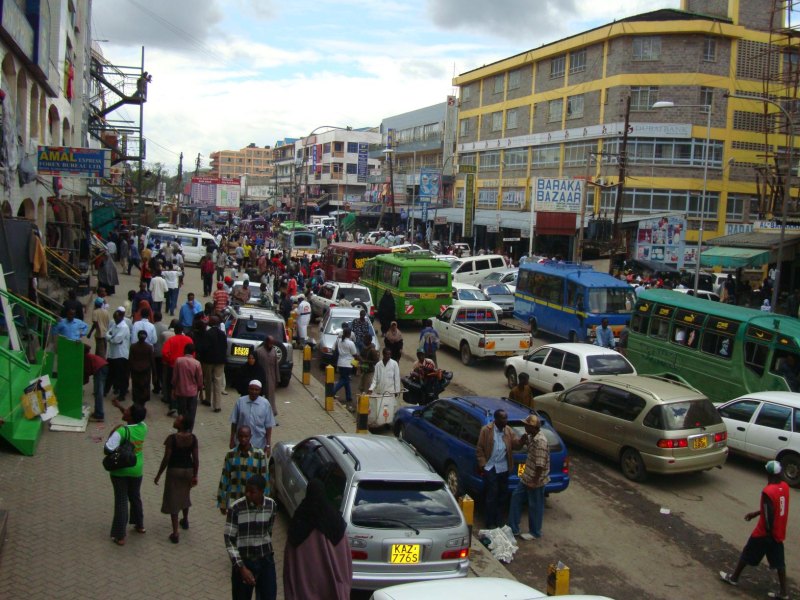
Most mornings begin the same way for many people. Alarm rings, body refuses to cooperate and for a brief moment before logic kicks in, there is that familiar existential question: Is this all there is? Not in a dramatic or catastrophic sense, but in a soft, repetitive way. The kind that appears between traffic, emails, deadlines and rent reminders. The kind that doesn’t scream but lingers.
Then you get up anyway. You get ready. You commute. You log in. You work.
Not because you are deeply inspired every day, but because life has structure, and structure has obligations.
The modern 9 to 5 system didn’t appear out of nowhere. It traces back to labour reforms that were meant to protect people from extreme working conditions. The idea of an eight-hour day was once a progressive demand, famously summarised by Robert Owen’s principle of ‘eight hours labour, eight hours recreation, eight hours rest’.
At the time, it was a boundary against exploitation. Later, industrial systems, including those popularised by figures like Henry Ford, helped standardise the five-day workweek.
It was never designed as a life philosophy. It was a compromise between productivity and human survival.
But over time, that structure became the default architecture of adulthood.
Today, many people still organise their lives around this framework, even though the nature of work has changed dramatically. We are no longer all factory workers clocking physical output. Many of us are in offices, on laptops, in meetings or answering messages that extend far beyond official working hours. The ‘eight hours’ often quietly expands into commuting time, mental load after work and the expectation of being reachable even when you are technically off duty.
So when someone like my friend steps out of that system, it can feel disruptive to those still inside it. Not necessarily because people think she is wrong, but because she is doing something many quietly imagine but rarely act on.
The reaction is often mixed: admiration, concern, curiosity and sometimes discomfort. Because her decision reflects something most people have encountered internally at least once, the thought that arrives on a tired morning when you are already running late: What if I didn’t do this anymore?
But here is the part that is often missed in these conversations. Staying in a 9 to 5 is not failure. For many people, it is necessity. Rent is due. Responsibilities are real. Stability is not just a preference, it is survival. A steady job provides structure, income and predictability in a world where uncertainty is expensive. Choosing to stay is not a lack of ambition. It is often a very rational decision within real constraints.
At the same time, leaving without a fully formed plan is not automatically irresponsibility either. Sometimes it is the result of accumulation — of exhaustion, frustration or a growing sense that continuing in the same pattern has a cost that is no longer sustainable. In those moments, clarity does not always come before action. Sometimes action comes first, and clarity follows later.
That is where the tension lives. Between stability and uncertainty. Between planning and instinct. Between endurance and change.
What makes my friend’s decision so emotionally charged is not just what she did but what it represents. It forces an unspoken question into view: Am I staying because I want to, or because I have to? And most people do not have a clear answer to that. Often, the truth is both.
People stay for rent, for responsibility, for security, but also sometimes out of habit, fear or fatigue. People leave for freedom, ambition or self-reinvention, but also sometimes without knowing exactly what comes next.
Neither path is pure. Both are human. And in between those two choices, most people are simply trying to get through their week.
So when I think about my friend handing in her resignation letter last week, I don’t see a dramatic escape or a reckless decision. I see something more familiar than most people admit. I see someone who reached a point where continuing felt heavier than pausing, and chose to step into uncertainty rather than remain in something that no longer felt aligned.
And I also see everyone else still in the system, still showing up, still negotiating with that quiet morning question.
Because the truth is, most people are not fully convinced this is all life is supposed to be. They are just managing it. One weekday at a time.