

Smartphone manufacturers are increasingly redefining themselves as artificial intelligence companies as industry seeks new sources of revenue and customer loyalty beyond selling devices.
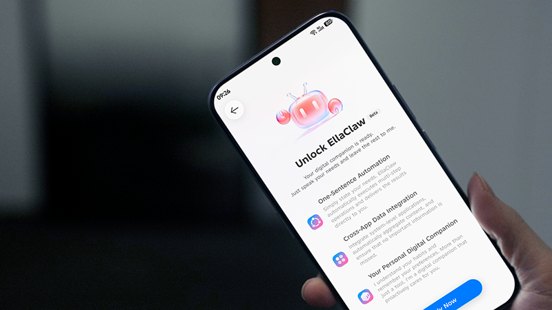
The shift emerged when TECNO unveiled an expanded version of EllaClaw, its beta-stage AI agent, pointing to the fact that the company wants to compete not only on smartphone specifications but also on the intelligent services running inside them.
The trend is sweeping the global smartphone industry, where manufacturers are embedding AI assistants capable of carrying out tasks across multiple applications, managing device performance and learning users' habits instead of limiting AI to simple voice commands or chatbots.
For brands targeting emerging markets such as Kenya, the strategy could prove particularly significant as smartphones increasingly serve as the primary tool for work, banking, commerce and communication.
"With TECNO EllaClaw, we are exploring how agentic AI can become genuinely practical in real mobile life," said TECNO general manager Jack Guo.
"Our goal is to create AI that helps simplify everyday tasks, reduce friction and make advanced experiences more accessible, while ensuring transparency and user control remain central to the experience."
He noted that the new AI tool is designed as an agent that can complete multi-step tasks across different applications.
The company says the system can monitor battery consumption, optimise storage and memory, track mobile data usage, organise travel plans, provide personalised morning briefings and interact with third-party services including ride-hailing, shopping and messaging platforms through natural language commands.
The move illustrates how competition in the smartphone industry is shifting from hardware innovations such as camera quality, screen resolution and processor speed towards software ecosystems powered by artificial intelligence.
Globally, smartphone manufacturers are facing mounting pressure as device replacement cycles lengthen and consumers hold onto their phones for several years.
He noted that for African-focused brands, the opportunity lies in tailoring AI to solve everyday challenges rather than offering premium features designed for high-end markets.
Kenyan consumers, for instance, often rely on a single smartphone to manage businesses, mobile banking, transport, social media, education and family communication.
TECNO's latest AI capabilities reflect that approach by focusing on practical concerns such as reducing mobile data consumption, extending battery life and automatically freeing up system resources to improve device performance. The company says users remain in control through confirmation prompts before major system changes are made.
Another notable development is EllaClaw's ability to work across different software ecosystems. Rather than requiring users to switch between multiple applications, the AI agent is designed to navigate supported apps on behalf of users while allowing them to observe each step, potentially reducing the friction associated with completing digital tasks.
Industry observers see such AI agents as the next stage in the evolution of smartphones, moving beyond assistants that merely answer questions to systems capable of taking action with user approval.
If successful, AI ecosystems could become just as important as hardware specifications in determining which smartphone brands dominate African markets over the next decade.
Although EllaClaw remains in closed beta testing and has not yet been released commercially, its unveiling signals a strategic shift in the smartphone business.
The next battle among handset makers may no longer be about who builds the fastest processor or the sharpest camera, but who develops the most useful AI companion for everyday life.