MUGWE: Ebola quarantine facility: Defending the indefensible
The choice should not be between safety and risk. It should be between managed, resourced, legally grounded engagement on Kenya's terms.
by SUSAN MUGWE
Audio By Vocalize
In 1854, London's Soho district was
consumed by the worst cholera outbreak England had seen in a generation. The
response of most residents and institutions was to flee. They closed the doors,
boarded up the windows and put distance between themselves and the invisible
killer.
But one man did the opposite. Physician
John Snow walked toward the outbreak, mapped every death street by street and
traced the source to a single contaminated water pump on Broad Street.
He
removed the handle. The outbreak stopped. Not because Snow was reckless, but
because he understood that proximity, managed with intelligence and discipline,
is the only effective response to a contagion that does not respect the distance
of those who refuse to engage it.
What Snow did is what Kenya's Laikipia
quarantine debate should be about. Not whether to be brave or reckless, or to
be America's servant or Africa's guardian.
But whether we understand the
difference between managed proximity and unmanaged vulnerability, and whether
we have the strategic clarity to choose between them before the choice is made
for us.
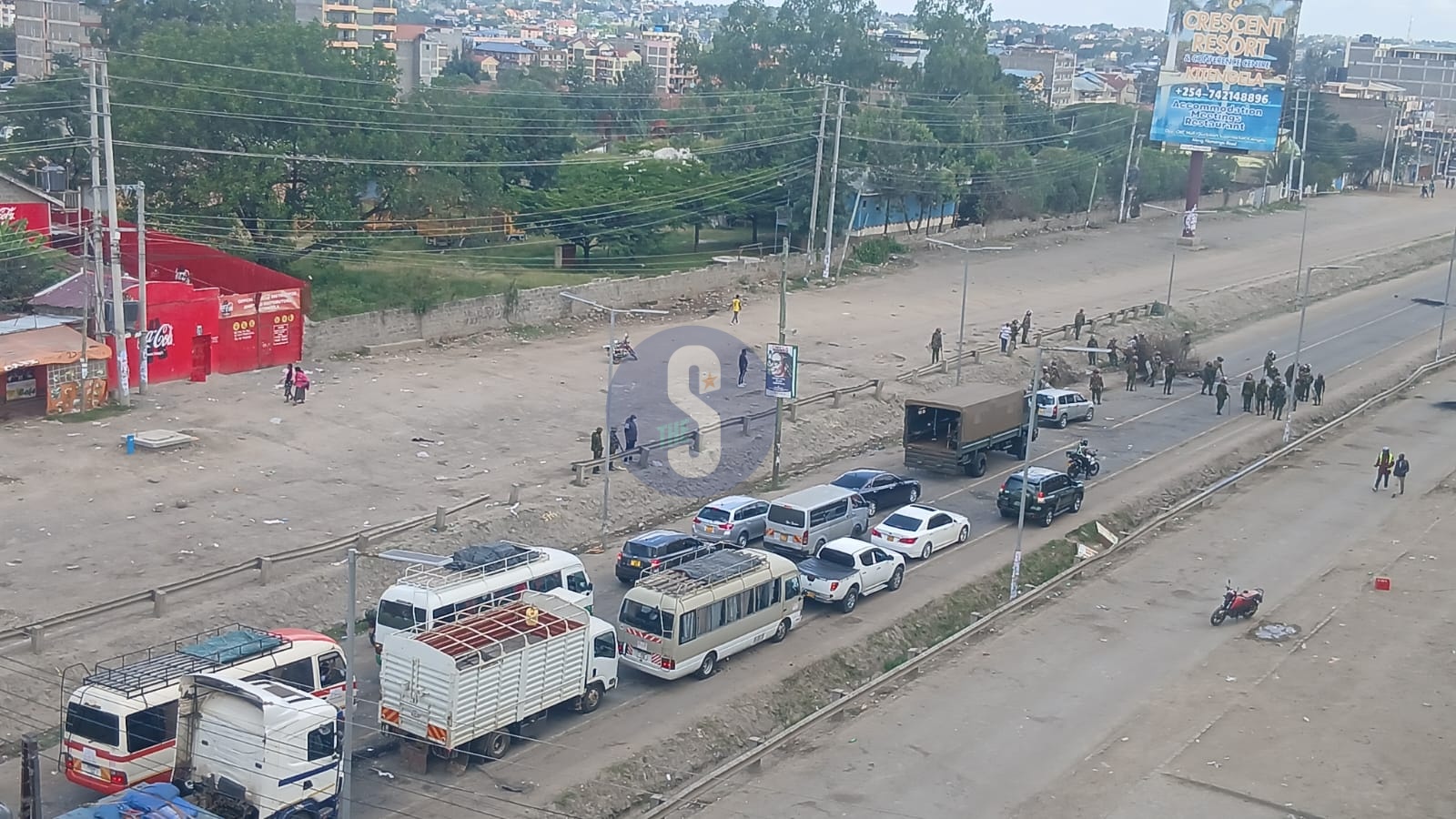
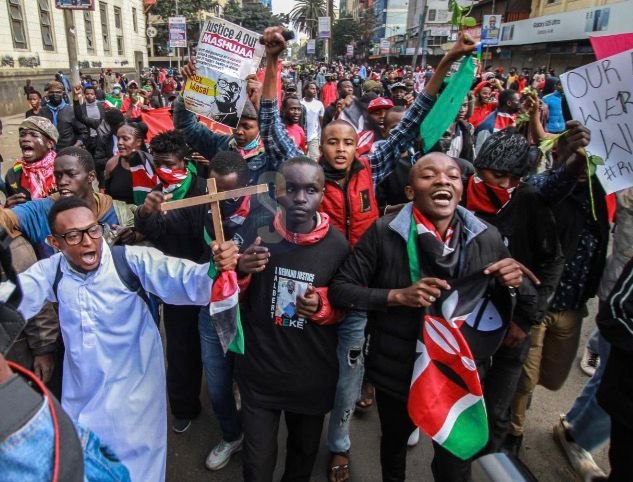
Hundreds of people exercised their
constitutional rights in Nanyuki and demonstrated against the establishment of
the Ebola quarantine facility at the Laikipia Air Base for American citizens
exposed to the virus, two days after the High Court suspended the facility
pending a case filed by the Law Society of Kenya and Katiba Institute.
The
leadership in Laikipia was equally unambiguous in their stance, and many
Kenyans on social media expressed the same outrage at this proposal.
It is easy to understand why Kenyans are
uneasy. Ebola is not an ordinary disease. It evokes fear, isolation, death and
memories of pandemics where ordinary people were asked to trust systems that
did not always explain themselves well.
These fears deserve to be taken seriously,
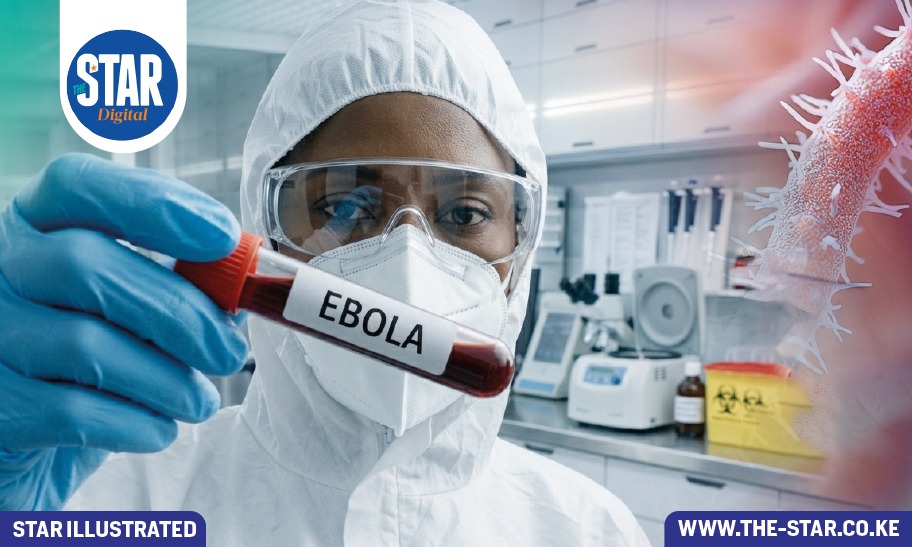
not dismissed. A quarantine facility for a haemorrhagic fever with no approved
vaccine and a case fatality rate between 30 and 50 per cent requires the most
rigorous biosafety standards, the clearest legal framework and the most
transparent public process available.
At least 263 confirmed cases of the
Bundibugyo virus, a rare strain of Ebola for which there is no approved vaccine
or treatment have been reported in DRC. Uganda has reported nine cases and
closed its border with DRC. Kenya has activated its Public Health Emergency
Operations Centre and intensified surveillance at border crossings, given the
frequent movement between Kenya and Uganda.
The threat is not hypothetical. It
is next door where we share trade routes, trucking corridors, family
connections and the quiet daily movement of people that no government decree
fully controls.
But fear, by itself, cannot be our foreign
policy. Suspicion, by itself, cannot be our public health strategy. And
outrage, however justified at first sight, cannot be the only language through
which Kenya negotiates its place in a dangerous world.
Begs the question. Should Kenya proceed
with the establishment of this facility?
I submit that we are asking the wrong
question. The real question is not whether Kenya should prepare, but whether we
should prepare from outside the room or from inside. And the answer is simple.
Kenya must be in the room and at the table because although we are not
currently affected, we are not currently isolated either.
On December 4 last year, Kenya and the
United States signed a five-year Sh2.5 billion Health Cooperation Framework
where the United States plans to support HIV/AIDS, tuberculosis, malaria,
maternal and child health, polio eradication, disease surveillance and
infectious disease outbreak response and preparedness.
The framework explicitly
commits both governments to detect, prevent and respond to emerging and
existing infectious disease threats affecting both countries.
Kenya is also bound by the International
Health Regulations, which require countries to develop the capacity to prevent,
detect, assess, report and respond to public health emergencies.
Global health
diplomacy is not a slogan. It is the practical recognition that diseases of
international concern cannot be managed by hiding behind national borders, but
through cooperation.
Therefore, a quarantine facility for
people exposed to an active Ebola outbreak, staffed by the United States Public
Health Service Commissioned Corps, equipped with state-of-the-art
biocontainment technology, operating under Kenyan law and on Kenyan soil, is
precisely what that framework anticipated.
The risks are clear. But we must do it
anyway because the argument for its establishment is right, and because being
right in a moment when everyone is retreating due to fear is exactly when the
argument needs to be made most clearly.
Here is the argument that should be made
in every cyber and Nanyuki street and at every bilateral negotiation table.
The
Laikipia facility, if properly negotiated, transparently governed and legally
anchored, should not be merely a place where foreigners are quarantined. It
should be a down payment on Kenya’s health security architecture.
But that is
only defensible if the quid pro quo is clear. Kenya should not carry
reputational and public health risk while others carry the knowledge, skills,
information, technology and vaccines. The facility should serve Kenyans and the
region too, not just Americans. And that should be the non-negotiable
principle.
Kenya has been listed among 10 African
countries at high Ebola risk. The warning comes against a difficult backdrop
where Kenya operates only three BSL-3 biosafety laboratories nationwide, and where
there is no approved vaccine or treatment for the Bundibugyo strain. So, the
question is not whether Ebola will test Kenya's preparedness. It is when. And
when it does, will Kenya be prepared?
Our three national laboratories capable of
testing for Ebola have the capability of releasing results within six to eight
hours of receiving a specimen, for a country of 55 million people.
During Covid-19,
Kenya was sending samples as far as South Africa to get results. That gap
between a confirmed case and a confirmed diagnosis is precisely where outbreaks
become epidemics.
This is what we need to demand to move the
needle. This facility must not be for Americans only. The Katiba Institute is
right that Kenya appears to have been selected as an alternative containment
site for America's nationals.
But the remedy is not to oppose the facility. It
is to expand its mandate. Any agreement governing the Laikipia installation
must explicitly provide that Kenyan citizens and nationals of East African
Community exposed to or infected with Ebola are treated at this facility and at
the same standard as American nationals.
Secondly, should be knowledge transfer.
The Laikipia facility is a knowledge transfer opportunity of extraordinary
value.
Every Kenyan health worker who trains alongside those teams, every
protocol shared, every technology demonstrated, every biosafety standard
transferred will be permanent upgrades to Kenya's own capacity that survive
long after the Ebola situation is contained.
The third demand should be replication.
One facility at a remote military airbase is not a health system. Kenya should
use this opportunity to negotiate the establishment of isolation and treatment
infrastructure at Kenyatta National Hospital, Coast General Teaching and Referral
Hospital, Jaramogi Oginga Odinga Teaching and Referral Hospital and Moi Teaching
and Referral Hospital.
These four nodes, corresponding to Kenya's major
population and transit corridors, would give the country the geographic
coverage where future health crises can be responded to and contained in a
timely manner.
The fourth demand is access to the vaccine
pipeline. The cooperation framework includes provisions to drastically reduce
the time taken to introduce life-saving medical countermeasures during a
disease outbreak, in support of Kenya's 7-1-7 public health response target.
There are currently several Bundibugyo-targeted vaccine candidates in
development which include pathogen data sharing provisions.
That data has
priceless value. Kenya, as the host of the primary containment facility for
this outbreak, and as a data-sharing partner, has a legitimate first-access
claim to any successful vaccine candidate. That claim must be made explicitly in
writing as a precondition of the facility's operation.
The fifth irreducible minimum should be
that the rest of the world must resist the lazy reflex of punishing Kenya for
doing the responsible thing. If Kenya agrees to host an Ebola quarantine and
preparedness facility under clear safeguards, it should not then be punished
through travel advisories and headlines that make us sound like an outbreak
zone.
That would be the height of bad faith. A country that accepts shared risk
in order to strengthen regional and global health security should be celebrated,
not stigmatised.
Fellow Kenyans, the choice should not be between
safety and risk. It should be between managed, resourced, legally grounded
engagement on Kenya's terms, with Kenya not just as a gracious host, but as the
primary beneficiary.
Finally, my unsolicited advice is to the
sceptics and critics. Your vigilance is this country's immune system. Keep
asking the questions. But distinguish between demanding better terms and
refusing the table altogether.
East Africa is home to 170 million people and
prone to frequent outbreaks of viral haemorrhagic fevers which mostly happen in
remote areas where requisite laboratory capacity is unavailable, causing
significant diagnostic delays and allowing epidemics to emerge.
Kenya has the
geography, the infrastructure and the partnership frameworks to become the
regional anchor of East Africa's health security architecture. The Laikipia
facility is the opening offer in that negotiation. Refusing it is not strength.
Accepting it on inadequate terms is not wisdom. Transforming it into a regional
health security platform that serves all, is strategy.
Snow’s actions were not risk free. They were
the systematic comparison of managed and understood risk against the unmanaged,
uncontrolled risk of doing nothing in the face of the outbreak. Kenya is at the
same decision point.
Fear asks, ‘why here?’ Preparedness
asks, ‘what happens if it reaches here?’ - Unknown
This is premium content
Subscribe to Continue Reading
Help us continue bringing you unbiased news, in-depth investigations, and diverse perspectives. Your subscription keeps our mission alive and empowers us to provide high-quality, trustworthy journalism. Join us today to make a difference!