


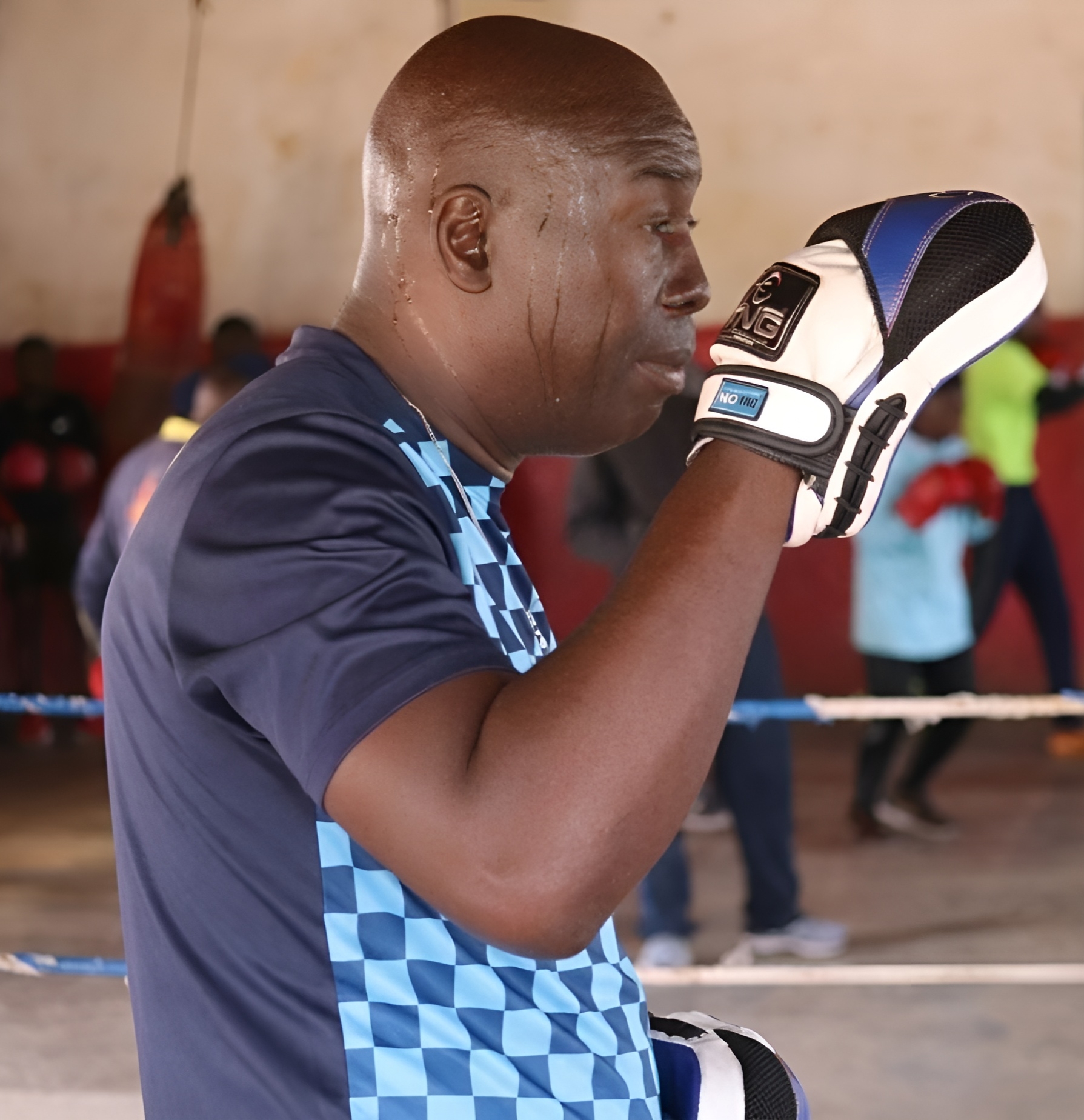
 Hit Squad head coach Benjamin Musa/HANDOUT
 Kenya national boxing team head coach Benjamin Musa has called for an urgent tactical transformation within the Hit Squad, warning that the country risks falling further behind unless local fighters quickly adapt to the evolving techniques and scoring demands of modern amateur boxing.
In an interview, Musa said the traditional aggressive style that once defined Kenyan boxing was no longer enough to guarantee success at elite international competitions, where judges now reward precision, speed, clean scoring and defensive discipline over sheer volume punching.
“The international scoring system has evolved significantly, and we must adapt or continue to fall behind,” Musa said.
“We are drastically shifting our technical focus away from raw volume punching to prioritise absolute precision, explosive speed, clean scoring, and intelligent defensive movement.”
For decades, Kenyan boxers built their reputation around relentless pressure, stamina and physical endurance, often overwhelming opponents through constant aggression.
However, recent international tournaments have exposed the limitations of that approach against technically refined opponents operating under the modern scoring system.
Musa admitted that Kenya’s declining returns on the global stage had forced the technical bench to rethink its entire philosophy, insisting that only fighters capable of adjusting to the modern game would survive in the new-look national team setup. “We are entering a phase where the only acceptable return from any international assignment is a podium finish,” Musa stated.
“The Hit Squad has a rich history of dominance, and it is time this new generation understands that wearing the national colours comes with the heavy responsibility of bringing home medals.”
The Boxing Federation of Kenya has already introduced stricter selection measures aimed at raising standards within the squad.
Several experienced fighters were reportedly left out of provisional plans after failing to impress during the Kenya Open championships, with Musa emphasising that places in camp would now be earned strictly on merit.
“Nobody has a guaranteed ticket to the residential training camp or the final travelling roster anymore,” Musa warned.
“Selection for this squad is strictly merit-based, drawn directly from the stand-out performers who proved their worth in the Kenya Open semifinals and finals.”
The Hit Squad is expected to begin an intensive preparation programme ahead of an upcoming international tour to Brazil, which Musa believes will provide crucial exposure to elite competition and different boxing cultures.
“Our biggest undoing in recent years hasn't been a lack of talent, but rather a severe deficiency in high-level match fitness,” Musa explained.
“Travelling to places like Brazil is essential because our fighters need to learn different boxing cultures and build the confidence required to face the world's best.”
Training sessions in Nairobi have already intensified as the technical bench works to sharpen the squad’s movement, tactical awareness and scoring efficiency before residential camp begins.
Coaches are reportedly placing increased emphasis on timing, ring control and intelligent shot selection in line with international judging trends.
Musa said the players had responded positively to the demanding changes despite the pressure surrounding the national team’s recent struggles.
“The roadmap we have laid out is demanding, but the boxers are responding exceptionally well to the new training modules,” he said.
“They understand the stakes are higher than ever, and I am confident this technical transition will manifest in fewer empty hands and more medals on the podium.”
Beyond immediate competition goals, the Boxing Federation of Kenya has also partnered with the Kenya Secondary Schools Sports Association to strengthen grassroots development structures across the country.
The programme aims to establish a long-term talent pipeline through certified coaching systems, modern training equipment and structured youth development programmes targeting schools and local boxing clubs.
“If we want a sustainable winning culture that outlasts the current crop of fighters, we must invest heavily in the grassroots level,” Musa noted.
“By targeting school-going youth and empowering local clubs, we ensure that the conveyor belt of elite boxing talent never runs dry.”
Despite the ambitious reforms, pressure remains firmly on the Hit Squad to restore Kenya’s reputation as one of Africa’s leading boxing nations.
Musa acknowledged that the federation’s rebuilding process would ultimately be judged by performances and medals on the international stage.
“We have talked enough about restructuring and building foundations over the past few seasons,” Musa concluded.
“Now, the time for talking is done, and it is time for this team to go out there and forcefully take what belongs to Kenya on the global stage.”