That was back in 2020 when Kavu was in Grade 2.
He was among only three
selected, out of a pool of about 50, to learn how to code after showing great
interest.
“Back then we were
just choosing a sprite and a backdrop, and giving it like two blocks so as to
make sounds and move,” Kavu, now 16, says.
In computer
graphics, a sprite is a 2D image or character that you can programme to move,
animate and interact on a screen.
Sprite coding
refers to using visual or text-based programming blocks to control these
characters, making them the building blocks for digital art, animations, and
video games.
As they moved to
the next classes, Kavu became more knowledgeable and skilled and could create
games and animations.
Now in Grade 8,
Kavu sees himself becoming one of the best game and animation creators among
his peers.
So when he heard
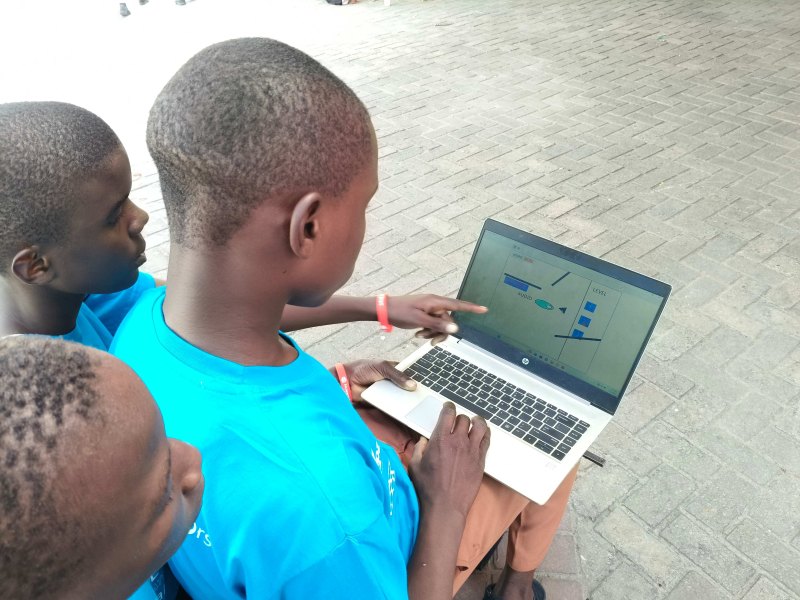
there was a Code Innovators Festival to be held in Mombasa, he quickly came up with a game which he
called “Sea Clean-up Mission” for him and his team to present at the Saturday event.
It was organised by Tech Kidz Africa.
“We have created a
solution, through a game, which can be used to clean the ocean,” Kavu says.
In the game, the
player uses mouse pointer to move the boat across the ocean to collect plastic
bottles.
Each bottle
represents the life of a sea creature in danger, meaning the more bottles one
collects, the more lives the player saves.
The game was
created using Scratch.
Scratch is a free
programming language and online community where you can create your own
interactive stories, games and animations.
The Grade 8 learner
says it took about a week to come up with the game.
“We did not have
enough digital devices to complete project in time,” Kavu says.
He says their
school lacks digital devices so they have to share the only two laptops available among the 50 learners in the Code Club.
Doris Dzame, a
teacher at Kasidi Junior School in charge of the Code Club, said platforms like
the Code Innovators Festival, provide an avenue through which the latent
talents in learners can be showcased.
“It has been a great moment for me and my
learners. I would urge that we have more of these occasions so that our
learners can showcase what they know and what they can do,” Dzame says.
The game, under the Animation and Gamification
category, is all about saving sea creatures, she says.
In the game, a gamer gets points when they collect
plastic bottles that have been carelessly disposed of in the ocean.
“When you collect one bottle, it means you have
saved the life of one creature,” Dzame says.
The game has three levels - easy, hard and very
hard.
In the hard level, there are obstacles preventing the
gamer from collecting the bottles, and they must manoeuvre around the obstacles
to collect the bottles, and save lives.
Dzame says the obstacles represent challenges that
make it hard to dispose of plastics properly, like the lack of waste bin along
the beaches, and the lack of knowledge about environmental conservation among
the populace.
The Code Club patron says the game teaches
learners the importance of conserving the environment.
“As they play, they learn the importance of
cleaning the sea and not dumping waste in the sea because when you dump waste
in the sea you are endangering the lives of sea creatures,” she says.
The teacher said platforms such as Code Innovators Festival also give learners confidence.
She said educators identify talented learners but
there are other things that they cannot do beyond that, and that is why such
platforms provide an opportunity for them to showcase to the world what they
can do.
Dzame says for the games to be available for use
by other people, they must be converted into an app so they can be downloaded.
“For now, we are just at the stage of creating and
from there is when maybe we can convert it into an app so it can be downloaded
by others for use,” she says.
Dzame says she is lucky she took over the Code
Club when already the learners had some knowledge of coding from the previous
teacher, who was a ICT expert.
“I am not an ICT expert. I wasn’t even into ICT
when I took over, so some of the things I know today I have learnt from the
learners,” she says.
She says teachers who are in charge of some of the
clubs like Kasidi’s Code Club need training too because it is not right to
always be with such learners but cannot help them when they have problems and
need to ask questions.
“If we had platforms where we can be trained, it
would help even the learners as we will be their guides,” she says.
She says the challenges they experience in the
school also make it more difficult to guide the learners.
“We have this Code Club but we have no devices. We
have only two laptops in the school. We do not have the tools needed. That is
why the learners only use Scratch and micro:bit,” she says.
She says with more coaching, the learners can
diversify and be able to use more advanced programming languages like
JavaScript and Python.
Dzame says though she is still in the learning
process herself, she helps the learners whenever she can, including buying data
for them and lending them her own personal laptop.
Paul Akwabi, the executive director at Tech Kidz
Africa and Code Innovators Academy, says contrary to popular belief, Kenyan
children are innovative and can come up with innovations that can take the
world by storm.
“We are trying to revive the innovation and
knowledge that has always been coming ‘through the sea’ to Mombasa and going
across the country.
“We have been seeing students who are very
innovative from senior schools and junior schools, who’ve created solutions
that are able to be even monetised, and make them start earning a decent
living,” Akwabi says.
He says they are working with
Close The Gap, an charitable organisation, the Education ministry, the Mombasa
county government, the Communication Authority of Kenya, among other
stakeholders to help the African child in terms of innovation.
“We were expecting 100 learners with innovations
but we got 300 instead. The number of people we were expecting was 500 but we
got almost a thousand at the festival,” Akwabi says.
He says this points to the interest that Kenyan
learners have in matters innovation.
Raruoch Melkio, the Kenya Science and Engineering
Fair Mombasa county vice chair, says it is out of such solutions that are
practical to humanity that certain problems bedevilling the society can be
solved.
He called for patenting of such innovations so
that they are not stolen by anyone whenever one works out.
“These are minors but are coming up with
innovations. If these innovations are not patented, they may be hijacked by
those who have the money. Then the innovators may not benefit monetarily from
their own innovations,” Melkio says.



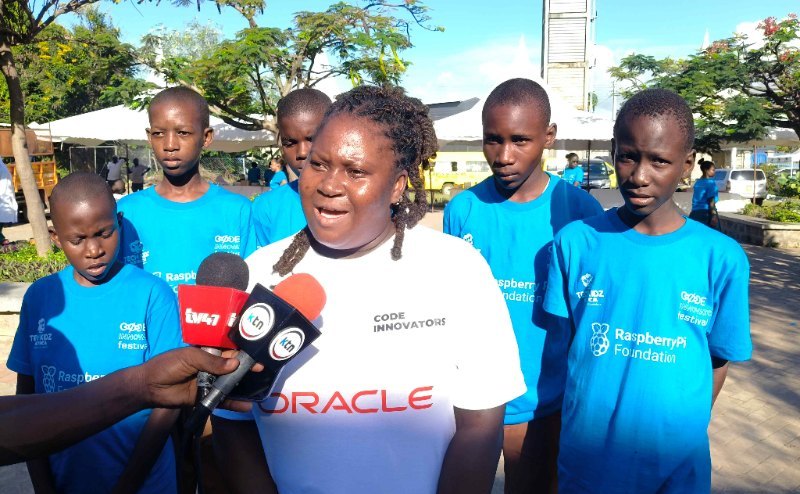 Kasidi Junior School’s Code Club patron Doris Dzame at Khadija primary school in Mombasa on June 13 / BRIAN OTIENO
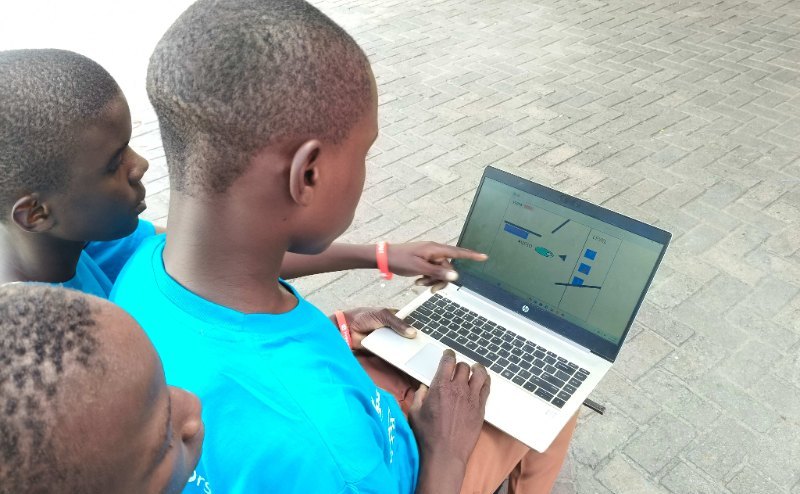 Kelvin Kavu, 16, showcases his game ‘Sea Clean-up Mission’ during Khadija primary school in Mombasa on June 13 / BRIAN OTIENO
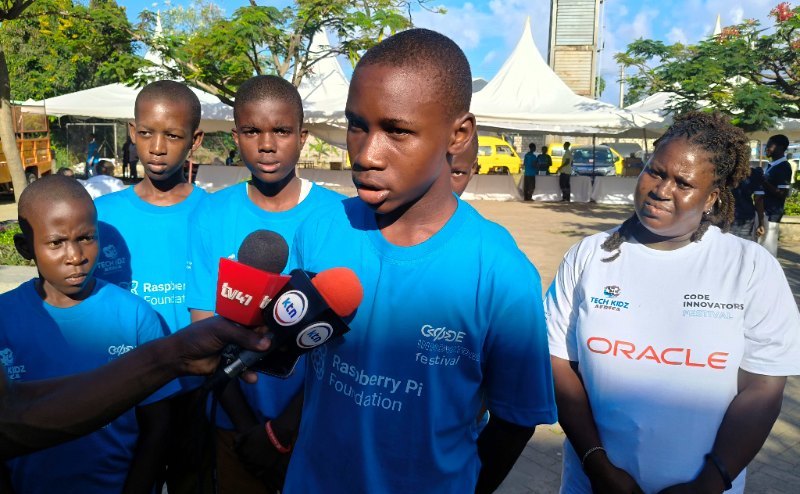 Kelvin Kavu, 16, at Khadija primary school in Mombasa on June 13 / BRIAN OTIENO