For months, President William
Ruto's administration has urged Kenyans to tighten their belts.
National Treasury Cabinet Secretary
John Mbadi has repeatedly defended what he describes as painful but necessary
budget cuts.
The
CS has over time insisted that the government is committed to living within its
means as it seeks to contain debt and restore fiscal stability.
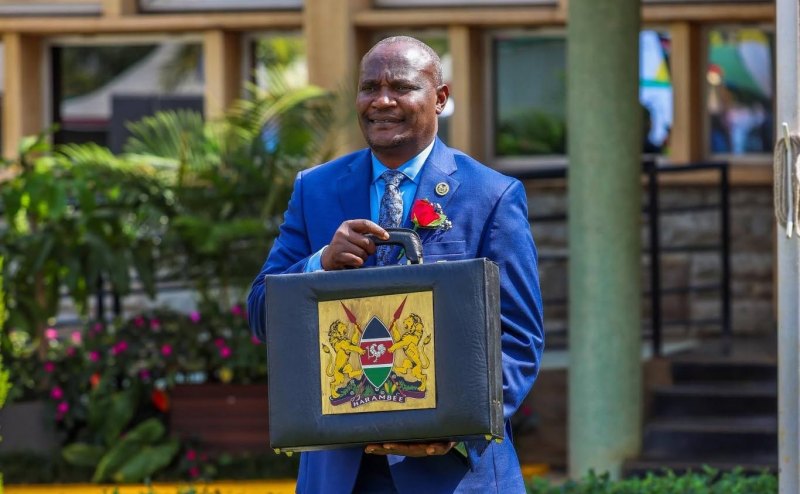
While presenting the 2026-27
Budget in the National Assembly on Thursday, Mbadi reaffirmed the
administration's commitment to austerity.
"The
government will continue implementing fiscal consolidation measures anchored on
enhanced domestic revenue mobilisation,
strict expenditure controls and improved efficiency in public spending,"
he said.
But
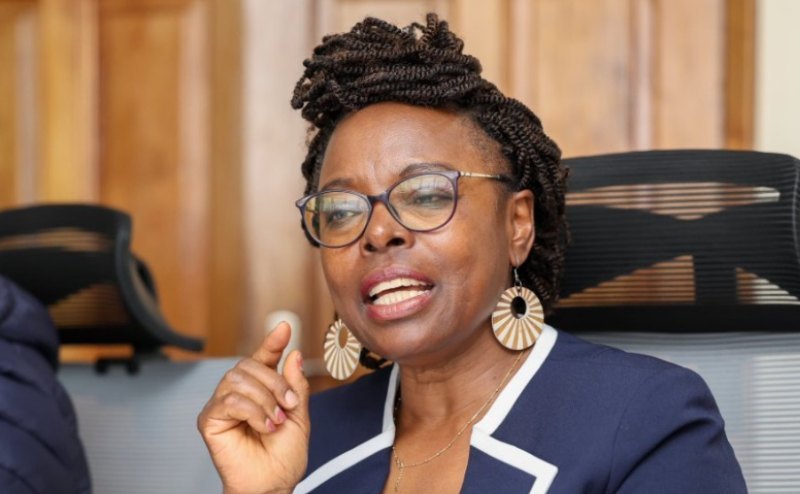
a new report by Controller of Budget Margaret Nyakang'o suggests the
government's spending patterns tell a different story.
The
National Government Budget Implementation Review Report for the first nine
months of the 2025-26 financial year reveals significant increases in
expenditure on foreign travel, hospitality, insurance and other operational
costs despite repeated pledges to curb non-essential spending.
When
President Ruto assumed office in 2022, and later in 2024 after Gen Z protests, he promised to slash
wasteful expenditure across government
The
National Treasury later reinforced the policy, targeting travel, hospitality
and other discretionary spending that officials argued could be reduced through
virtual meetings and tighter controls.
Yet
the latest figures show recurrent expenditure by ministries, departments and
agencies continued to rise.
Between
July last year and March, recurrent
spending reached Sh1.36 trillion, up from Sh1.20 trillion during the same
period in the previous financial year.
The
increase represents an additional Sh155.73 billion spent on day-to-day
government operations.
Compensation
of employees – that is salaries and allowances, accounted for the largest share
of the increase, rising by Sh47 billion.
Utility
costs increased by about Sh500 million, while expenditure on foreign travel
climbed by Sh1.4 billion to Sh6.5 billion.
Foreign
travel has been one of the expenditure items the government has repeatedly
promised to contain as part of its austerity programme.
The
latest spending represents a 27 per cent increase from the Sh5.1 billion spent
during the corresponding period of the 2024-25 financial year.
Although
domestic travel recorded a slight decline, it still consumed Sh10.9 billion
compared to Sh11.6 billion spent during the same period last year.
Government
spending on rent also continued to rise despite ongoing efforts to rationalise
office space and reduce administrative costs.
The
report shows expenditure on rent increased by about Sh500 million to Sh6.7
billion.
Hospitality
expenditure also posted one of the sharpest increases in the period under
review.
Spending
under the category, which includes catering services, receptions, conferences
and entertainment, rose by Sh1.3 billion to Sh4.9 billion from Sh3.6 billion in
the previous year.
The
34 per cent increase is likely to raise questions about the effectiveness of
expenditure controls that have been repeatedly announced by the Treasury.
Insurance
expenditure registered an even more dramatic jump, moving up almost three times
last year’s spend.
According
to the report, spending on insurance rose from Sh8.4 billion in the first nine
months of the 2024-25 financial year to Sh23.3 billion during the review period.
Nyakang'o's
report does not explain the sharp increase, leaving unanswered questions about
whether the rise was driven by changes in asset valuation, expanded coverage or
procurement decisions.
Another
category that expanded significantly was "other operating expenses",
an expenditure vote often associated with discretionary government operations.
Spending
under the category rose from Sh50.8 billion last year to Sh61.3 billion this
year, an increase of about Sh10 billion.
Security
agencies accounted for a substantial share of the additional expenditure, even
as transfers to state corporations and subsidies declined by about Sh6 billion.
The
report also points to growing reliance on emergency spending authorised under
Article 223.
The
provision allows the government to withdraw money from the Consolidated Fund before parliamentary approval when
expenditure is urgent and unforeseen.
However,
Nyakang'o says that a significant share of the
expenditure authorised under the provision was directed towards operational
costs, including other operating expenses.
The
trend raises concerns that emergency funding mechanisms are increasingly being
used to support routine government operations rather than genuine emergencies.
As
per the report’s findings, the scale of such spending has risen sharply over
the past year.
The
report shows that the CoB authorised
Sh42.22 billion in Article 223 withdrawals during the 2024-25 financial year.
In
the current financial year, the amount ballooned nearly fivefold to Sh206.81
billion.
Among
the expenditures financed through the emergency provision was Sh3.9 billion
allocated to the State Department for Sports for Africa Cup of Nations-related
subscriptions and commitments.
Nyakang'o
questioned whether all expenditures charged under Article 223 met the
constitutional threshold of being unforeseen and urgent.
"The
Controller of Budget recommends that requisitions under Article 223 of the
Constitution should be applied strictly in line with the requirements on use of
Article 223, which are unforeseen and of an emergent nature," the report
states.
Meanwhile,
the government's wage bill continued to grow despite ongoing efforts to contain
recurrent expenditure.
The
report indicates that compensation to employees reached Sh516.97 billion during
the first nine months of the financial year.
Although
the expenditure remained within the statutory ceiling of 35 per cent of
ordinary revenue, it represented a Sh47 billion increase compared to the
previous year.
The
review also found that several independent commissions, including the Judicial
Service Commission, the National Land Commission and the Kenya National
Commission on Human Rights, utilised less than 60 per cent of their allocated budgets.
Nyakang'o
attributed some of the underperformance to vacant positions and implementation
delays, highlighting weaknesses in budget planning and execution.
For
the CoB, the findings underscore the need
for stricter discipline if the government's fiscal consolidation agenda is to
be taken seriously.
"Sustained
fiscal consolidation, prudent debt management, enhanced cash management and
stronger oversight of borrowing and the use of public funds will be critical to
strengthening fiscal resilience and supporting sustainable economic
growth," Nyakang'o said.