Scramble for marginalisation cash as review of Equalisation Fund policy reopens county battle
The policy review will determine the areas eligible to benefit from the Equalisation Fund.
by JULIUS OTIENO
Audio By Vocalize
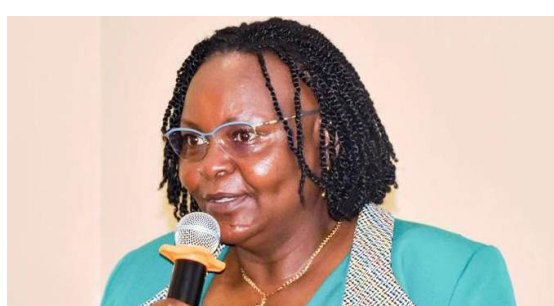
CRA chairperson Mary Chebukati /FILE
A fresh battle over the sharing of billions under the Equalisation Fund has erupted as the Commission on Revenue Allocation begins reviewing the policy that determines which counties and regions qualify as marginalised.
The review of the Third Policy for Identifying Marginalised Areas has revived an emotive debate among leaders.
Leaders from arid and semi-arid counties want the list of beneficiaries reduced, while those from other counties insist they also have pockets of deprivation deserving government support.
The policy review will determine the areas eligible to benefit from the Equalisation Fund.
The fund is a constitutional allocation equivalent to 0.5 per cent of all nationally collected revenue, which finances basic services such as water, roads, health facilities and electricity in marginalised areas.
Leaders from the 14 counties originally classified as marginalised have urged the commission to return to the initial model used in 2013, arguing that expanding the list of beneficiaries has diluted the impact of the fund.
Kakamega Senator Boni Khalwale said the Equalisation Fund was created to address historical marginalisation rather than general poverty.
"My position is that the Equalisation Fund was not meant to fight poverty but to fight marginalisation. If it is about fighting poverty, then all counties should benefit," he said.
Khalwale argued that widening the number of beneficiaries had significantly reduced the amount allocated to each area, undermining the objective of transforming historically neglected regions.
"I saw a region that was allocated Sh3 million. What can Sh3 million do when it comes to healthcare provision? It is minimal. Let us fight marginalisation, not poverty, with the Equalisation Fund," he said.
The debate is expected to intensify in the coming months as counties lobby the commission ahead of the publication of the new policy.
While leaders from the original 14 counties are pushing for a return to the earlier framework, governors and lawmakers from other parts of the country argue that marginalisation is not confined to entire counties but also exists within subcounties, wards and locations.
The second policy, adopted in 2018, expanded eligibility from 14 counties to 1,424 marginalised areas spread across 34 counties after changing the unit of analysis from counties to subcounties.
Supporters of the current approach argue it allows the fund to reach neglected communities in counties that may appear relatively developed overall but still contain isolated areas lacking basic public services.
CRA has already held consultations with governors from the original 14 beneficiary counties, who pressed for a return to the first policy.
The commission has also met the Senate Finance and Budget Committee.
More consultations are planned with Members of the National Assembly, civil society organisations and members of the public before the revised policy is finalised.
The commission's chairperson, Mary Chebukati, said the review offers an opportunity to improve the framework using lessons learnt from the implementation of the previous policies.
"The review presents an important opportunity to reflect on lessons from previous policies and ensure that the next framework remains responsive to the needs of marginalised communities," she said.
Chebukati said stakeholder views collected during the consultations would help shape a policy that remains responsive to changing development needs while advancing the constitutional principle of equitable development.
"The insights gathered will play a critical role in shaping a robust and responsive policy framework capable of addressing the evolving needs of marginalised communities," she said.
According to the commission, discussions focused on the criteria for identifying marginalised areas, lessons learnt from implementing previous policies, challenges encountered and proposals for strengthening the framework.
The commission said the consultations also provided valuable grassroots perspectives on how the Equalisation Fund has affected beneficiary communities and where improvements are needed.
The Equalisation Fund is established under Article 204 of the Constitution and receives 0.5 per cent of nationally collected revenue based on the most recent audited accounts.
Its primary objective is to improve access to essential services in historically marginalised areas by bringing them closer to the standards enjoyed in the rest of the country.
The constitution allows the fund to be spent either through appropriations approved by Parliament or through conditional grants to county governments.
INSTANT ANALYSIS
The review of the Equalisation Fund policy is likely to trigger a fierce political contest as counties compete for a share of the limited allocation. At the heart of the debate is whether the fund should address historical marginalisation or broader poverty. Reverting to the original 14 counties could concentrate resources for greater impact, while retaining the expanded list would ensure neglected pockets in other counties continue to receive support. CRA will have to balance constitutional equity with competing regional interests.
This is premium content
Subscribe to Continue Reading
Help us continue bringing you unbiased news, in-depth investigations, and diverse perspectives. Your subscription keeps our mission alive and empowers us to provide high-quality, trustworthy journalism. Join us today to make a difference!

 CRA chairperson Mary Chebukati /FILE


![[PHOTOS] The new Ngong –Naivasha Road viaduct](https://cdn.radioafrica.digital/image/2026/06/64d4f771-4432-4aee-ba3c-2f304c4436ec.jpg)