Long before a public service vehicle (PSV) or commercial truck is cleared to ferry passengers and goods on Kenya's roads, it must first survive a meticulous inspection process that leaves little to chance.
At the National Transport and Safety Authority (NTSA) Motor Vehicle Inspection Centre along Likoni Road in Nairobi's Industrial Area, the country's busiest inspection facility, dozens of vehicles stream through daily for mandatory roadworthiness tests.
The centre is one of 17 NTSA inspection stations spread across the country and serves as a critical line of defence against mechanical failures that could lead to road crashes.
According to NTSA Deputy Director and Head of Motor Vehicle Inspection Opere Nyaroya, every inspection begins long before the vehicle enters the inspection bay.
"The process starts with the vehicle owner booking an inspection through the eCitizen platform. Once they arrive at the centre, our inspectors take over and begin by confirming the identity of the vehicle," Nyaroya said.
The first and perhaps most crucial step is verifying that the vehicle being presented is indeed the one booked for inspection.
"The inspector will ascertain the chassis number or Vehicle Identification Number (VIN) and confirm that it matches the details captured in the booking system and our records. We also physically verify the engine number. If there is any discrepancy, the inspection fails at that stage," he explained.
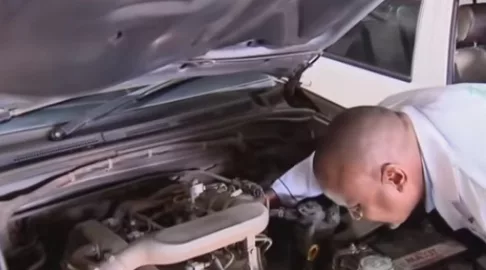
Once the vehicle's identity is confirmed, inspectors embark on a comprehensive mechanical examination covering virtually every component that affects safety.
The engine is examined for performance and visible defects before attention shifts to the transmission system, braking system and steering components.
Inspectors carefully examine the undercarriage, checking for oil leaks, damaged suspension components, worn tie rods, defective shock absorbers and gearbox leakages that could compromise the vehicle's stability on the road.
"We inspect the entire undercarriage because worn-out components may not be visible to the driver but can easily result in loss of control while driving," Nyaroya said.
For passenger vehicles, seating arrangements receive equal attention.
Inspectors count the number of seats to ensure they comply with the approved specifications before checking whether they are securely mounted.
Seat belts are also tested to establish whether they function properly and provide adequate protection to passengers.
"The seats must be safely mounted according to the required standards. We also inspect the safety belts because they are an essential safety feature," he said.
The inspection extends to the vehicle's electrical system.
Every headlamp, brake light, indicator, reverse light and hazard lamp must function correctly. Windscreens are examined for cracks that could obstruct the driver's vision, while windscreen wipers are tested to ensure visibility during rainy conditions.
The braking system undergoes one of the most important examinations.
Using specialised testing equipment, inspectors determine whether the brakes meet the required stopping efficiency and whether braking force is evenly distributed across the wheels.
Another critical stage is emissions testing, which determines whether the vehicle complies with environmental standards.
A probe is inserted into the vehicle's tailpipe and connected to electronic testing equipment.
"The machine guides the inspector through the acceleration process before giving an overall verdict. Whether the vehicle passes or fails is determined by calibrated equipment operating within approved standards," Nyaroya explained.
For diesel-powered vehicles, inspectors use smoke meters to measure opacity—the amount of smoke emitted through the exhaust.
Petrol-powered vehicles undergo gas analyser tests that measure emissions against acceptable environmental limits.
"If a vehicle produces excessive smoke, the machine immediately detects that the opacity level is too high," he said.
Even the vehicle's appearance matters.
Inspectors assess the condition of the bodywork, paint, interior upholstery and general cleanliness.
A poorly maintained vehicle, officials say, may indicate neglect that extends beyond what is immediately visible.
After every check is completed, the inspection system generates an electronic report indicating whether the vehicle has passed or failed.
Vehicles that fail are not automatically locked out permanently.
Instead, owners receive a detailed report outlining every defect requiring attention.
"The inspection report will indicate the areas that failed and advise the owner to repair them before presenting the vehicle for reinspection within 14 days. If they return within that period, they are not charged another inspection fee. Our inspectors will only verify the specific defects that caused the failure," Nyaroya said.
The annual inspection requirement applies to commercial and public service vehicles to ensure they remain roadworthy throughout their operational life.
For NTSA, the exercise is more than a regulatory requirement, it is a lifesaving intervention designed to keep mechanically defective vehicles off Kenyan roads.
Every vehicle that leaves the inspection lane with a pass certificate, officials say, represents another step towards reducing road crashes, protecting passengers and improving confidence in the country's transport system.