President William
Ruto’s administration mobilised Sh416 billion in fresh loans in the
first four months of 2026, pointing to the government's continued reliance on borrowing.
The money was borrowed to fund the budget,
refinance maturing debt and bankroll key development projects.
There have been growing concerns over the country's
debt burden.
The total debt stock was a few million shy of the
Sh13 trillion mark as of March 2026.
A report tabled in Parliament by the National
Treasury shows a mix of concessional loans from development partners and a
sovereign bond from international capital markets.
The report paints a picture of a government still
leaning heavily on external borrowing as it seeks to balance development
spending.
The biggest component of the financing was a $2.25
billion (about Sh290 billion) sovereign bond issued in February through
Citibank Europe Plc Germany Branch.
The bond was split into two tranches: a $900 million (Sh116 billion) note
maturing in 2034 carrying an interest rate of 7.9 per cent and a $1.35
billion (Sh174 billion) note maturing in 2039 at 8.7 per cent.
Treasury says the proceeds were used for liability
management operations and budget support.
Part of it, the document shows, went into efforts
to refinance existing debt while plugging financing gaps in the current
financial year.
Besides the Eurobond, Kenya signed seven new
external loan agreements worth about Sh161 billion with multilateral
and bilateral lenders.
They were used to finance projects in education,
housing, climate resilience and general budget support.
Among the largest facilities was a $350
million (about Sh45.4 billion) package from the World Bank to
support affordable housing, land administration reforms and urban planning.
The government also secured a $125 million
(Sh16.2 billion) loan from the International Bank for Reconstruction and
Development to expand access to affordable housing finance.
It was also to improve property registration and
unlock private investment in the housing sector.
Education accounted for another significant share
of the new borrowing with Sh29 billion credit from the World Bank for financing
of various projects including construction of classrooms.
The programme seeks to improve learning outcomes,
reduce regional disparities in education and strengthen retention of girls in
junior secondary schools.
The government also secured UA55.16 million
(about Sh9.8 billion) from the African Development Fund for a project
aimed at strengthening research, innovation and skills development.
Another $30 million (Sh3.9
billion) credit will finance the Kenya Locally Led Climate Action
Programme, supporting counties to implement climate adaptation and resilience
projects.
Japan also extended a JPY25 billion (about
Sh20.3 billion) loan to support general budget financing, implementation
of the National Automotive Policy and reduction of energy losses.
The latter is aimed at helping boost the stability
of the national electric grid.
The Treasury says the financing aligns with the
government's Bottom-Up Economic Transformation Agenda and will support
investments expected to stimulate economic growth while improving access to
public services.
The report illustrates the government's dual
borrowing strategy, which is, raising cheaper concessional financing from
development partners.
This is while selectively accessing commercial
markets to refinance expensive debt and meet immediate financing needs.
Most of the multilateral loans carry concessional
terms with repayment periods of up to 25 years and relatively low interest
rates.
Even so, an analysis of the report shows that the
Eurobond reflects the higher cost of commercial borrowing.
The latest disclosures come as the government faces
increasing pressure to contain the country's public debt while financing
development programmes.
Controller of Budget Margaret Nyakang’o in her most
recent report raised concerns about the management of loans.
“There is a need for the government to strengthen
debt management practices to minimise commitment fees, penalties, and other
incidental borrowing costs, as such charges do not directly contribute to the
productive utilisation of borrowed funds,” she said.
Debt servicing remains one of the largest items in
the national budget, with Sh2 trillion projected to be allocated annually
towards repayment.
The government, for its part, maintains that new borrowing is financing
productive investments and replacing more expensive debt.
Treasury has consistently defended its approach,
saying the focus is increasingly shifting towards concessional financing from
institutions such as the World Bank and ADB.
Instant analysis
The new financing targets projects aimed at
reducing electricity system losses, implementing the national automotive
policy, expanding affordable housing, reforming land administration, improving
urban planning, boosting primary and higher education, science and technology
research, financing county climate resilience projects, refinancing maturing
debt and providing general budget support.

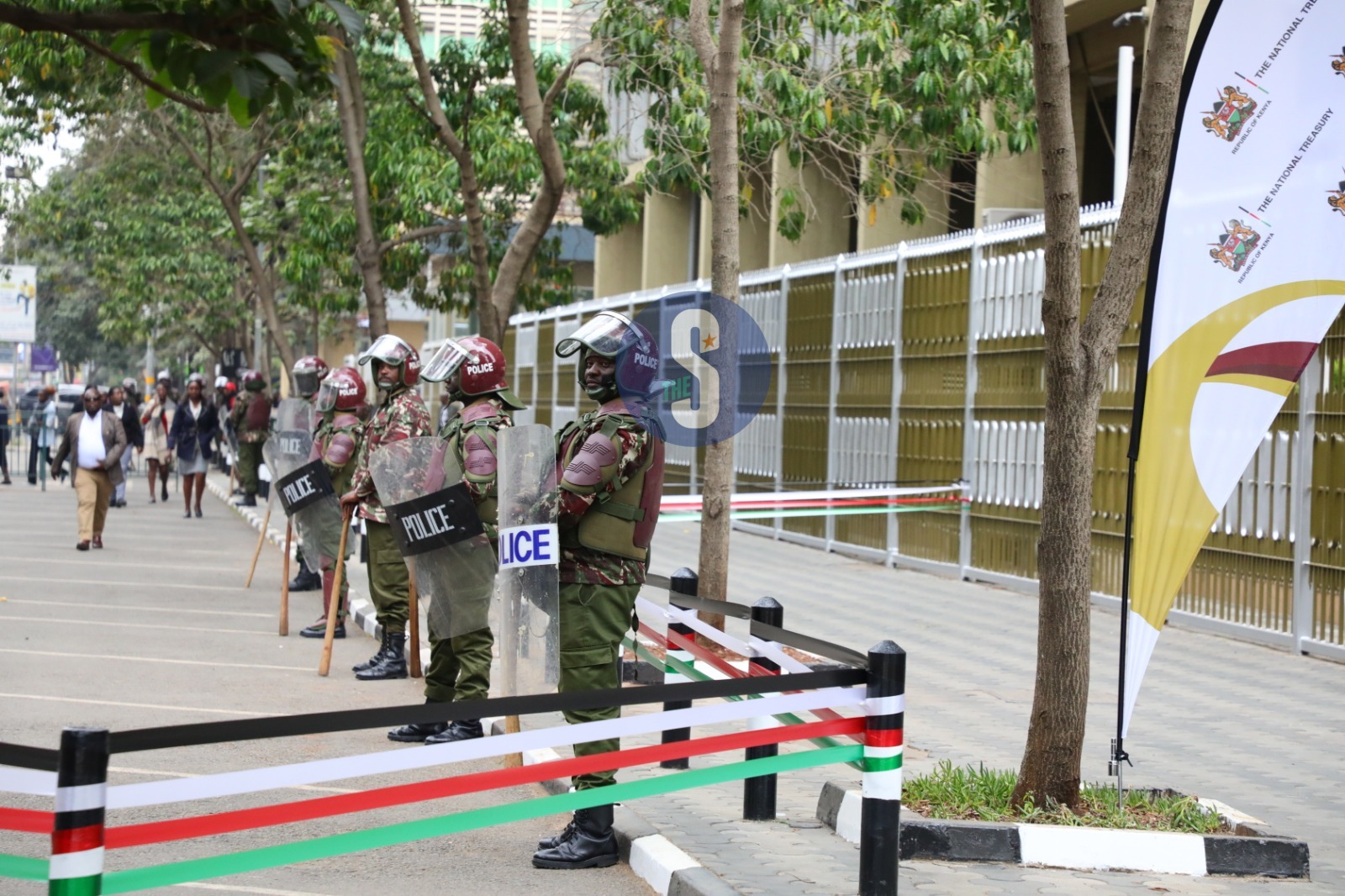
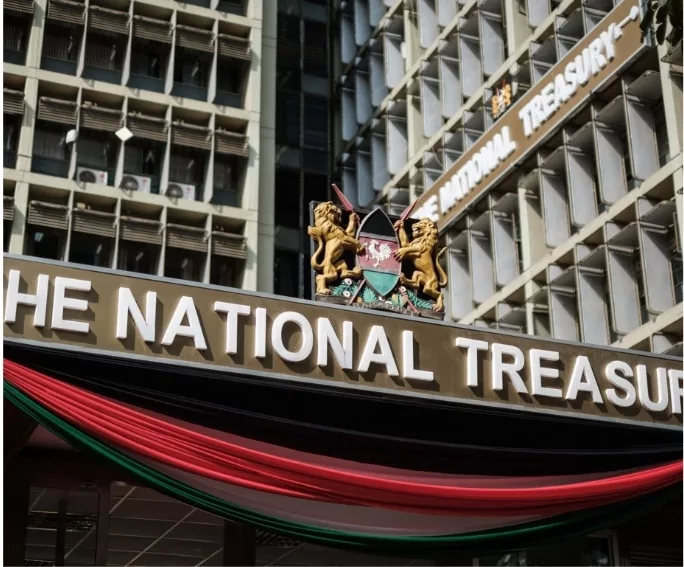 National Treasury Building in Nairobi /FILE