Days before Christmas, families would arrive carrying more
than suitcases.
There would be sofa sets, beds, mattresses, aluminium boxes, sacks of clothes, iron sheets,
bicycles, televisions and bags of shopping.
Then came January, the same families would return to Nairobi
aboard the very same buses, only this time carrying bags of maize, beans, chicken and occasionally a goat would find its
place among the luggage.
For decades, there was one bus company that became
synonymous with these journeys and these extraordinary loads –Mbukinya.
With the death of its founder, Paul Mburu Kinyanjui
Muthumbi, on July 20, aged about 92, Kenya is bidding farewell to a transport
entrepreneur whose buses quietly became part of the country's social and
economic history.
Founded around 1983, Mbukinya whose name originated as a
shortened blend of the founder's names: Mburu Kinyanjui, grew into one of
Kenya's oldest surviving long-distance public service vehicle companies,
connecting Nairobi with Western Kenya, Nyanza and later the Coast.
For many low-income earners, the company was more than a bus
operator. It was an affordable bridge between the city and home.
While middle-income travellers often opted for more
expensive bus companies, thousands of factory workers, watchmen, house helps,
students and small traders found a place on Mbukinya's buses.
Students travelling to Nairobi for the first time to join
universities are also in the list of those who have memories of the long
journies in Mbukinya.
Its fares were affordable and often negotiable, especially
during difficult economic times.
More importantly, passengers were rarely asked to leave
behind the belongings that represented years of sacrifice.
A newly bought sofa destined for a village house could
travel on Mbukinya. It was so convenient that a joke was wrapped around how someone
from Luo Nyanza or Western could travel home for Christmas with his sofa set or
bed and return with it to the city in January.
So could a mattress, a cupboard, household utensils or a
sewing machine.The company's generous luggage policy became legendary.
For many families, Mbukinya was not merely transporting
luggage. It was transporting livelihoods.
“I once transported a whole roofing set of iron sheets on a
bus carrier,” recalls Moses Odhiambo, a city resident who comes from Nyanza.
Long before he became one of Kenya's best-known transport
operators, Mzee Muthumbi was an egg and chicken hawker in Limuru.
For 11 years, he sold eggs and poultry while patiently
saving every shilling with a single dream, to own a bus. He saved Sh 6,000,
which he combined with a Sh 5,000 loan to buy his first second-hand bus. He
started by operating a route between Limuru and Nairobi.
Few could have imagined it would become the foundation of a
transport company that would serve millions over four decades.
His business philosophy was simple. Serve ordinary Kenyans,
provide affordable transport and allow passengers to travel with the
possessions that mattered to them.That formula worked.
From a single vehicle operating between Limuru and Nairobi, Mbukinya
expanded into a fleet serving Western Kenya, Nyanza and even Mombasa at some
point, while also building a thriving parcel transport business.
The company became especially popular among traders who
relied on its parcel services to move goods between regions. As many bus
companies came in and left, Mbukinya has survived the taste of time.
“Paul was a respected elder, businessman, family man,
community leader and a devoted believer in Christ,” Limuru MP John Chege eulogized.
Despite serving some of the country's busiest highways for
more than 40 years, the company earned respect for maintaining a relatively
strong safety record, helping cement public confidence in the brand.
The Matatu Owners Association has described him as one of
the founding pillars of Kenya's long-distance public transport sector.
Association president Albert Karakacha said Muthumbi's
greatest achievement was making safe, reliable and affordable transport
accessible to ordinary wananchi while creating hope and opportunity through
mobility.
“The late Paul Mburu was more than a transport entrepreneur;
he was a pioneer, an industry icon. When he established Mbukinya Bus Services, he
did not merely start a transport company, he created hope and opportunity for
countless Kenyans by providing safe, reliable and affordable travel between
Nairobi, Western and the Nyanza,” Karakacha said in a condolence message.
For more than four decades, Mbukinya became a household
name. Generations of Kenyans fondly remember the company's affordable fares,
which made travel possible even for those with modest means.
“At a time when many could not afford premium transport
services, Mbukinya ensured that no one was left behind. His commitment to
accessible transport reflected a deep understanding of the needs of ordinary
wananchi,” Karakacha notes.
Away from business, Muthumbi is remembered as a church elder,
community leader and family man whose quiet determination inspired many
entrepreneurs.
Muthumbi has also been widlly euologised on social media
platforms.
“Ultimately, the legacy of the Kinyanjui transport venture
serves as a powerful reminder of what defines true Kenyan innovation. It is the
ability to look past tribal or regional boundaries, identify a universal human
need for connection and trade, and build a reliable bridge to fulfill it,” former
journalist and businessman, Ngugi Muiruri wrote.
Towards his sunset days, the company was mainly under the
management of his children, yet for many Kenyans, Mbukinya represents something
deeper than a transport company.
It evokes memories of mothers protecting live chickens under
bus seats and fathers proudly sending new furniture home after years of working
in Nairobi.
It tells the story of rural families building better homes
one bus trip at a time.
As Mzee Muthumbi is laid to rest, generations of Kenyans
will remember not just the man who built a bus company, but the entrepreneur
who understood that for ordinary families, the journey home was never just
about the passenger.
It was about carrying a piece of hope with them.

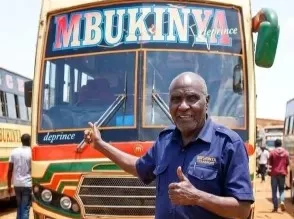
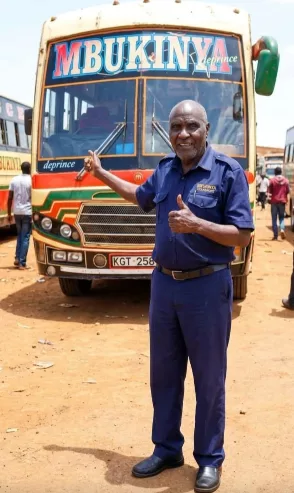 Mbukinya founder Paul Mburu Kinyanjui Muthumbi/ HANDOUT