President William Ruto is confronting what could become
the defining political dilemma of his re-election campaign.
The dilemma has been caused by competing regional interests that have piled pressure on
his choice of a running mate ahead of next year’s general election.
The debate has intensified following the humiliating
defeat that the United Democratic Alliance (UDA) Party suffered in last week's Ol Kalou MP by-election.
The result revived questions about whether Deputy
President Kithure Kindiki remains the best political partner for Ruto's
second-term bid.
The conversation has become even more complicated by the
emergence of Nairobi Senator Edwin Sifuna as a possible opposition running
mate.
His prospects, analysts say, could dramatically alter
voting patterns in Western Kenya and force Ruto to rethink his 2027 arithmetic.
If Sifuna ultimately joins an opposition ticket led by
Wiper leader Kalonzo Musyoka, political observers argue that Western Kenya
could rally behind one of its own.
This is widely viewed as likely to pile fresh pressure
on Ruto to counter the move by offering the deputy presidency to a Luhya
leader.
That scenario would leave the President balancing
between retaining his foothold in Mt Kenya while preventing further erosion of
support in Western Kenya.
Yet abandoning Kindiki carries equally serious political
risks.
Ol Kalou arguably exposed growing unease within sections
of Mt Kenya, where former DP Rigathi Gachagua continues to wield influence.
In the same vein, replacing Kindiki could accelerate the
region's drift away from the Kenya Kwanza administration.
Questions have also emerged over how much additional
political value Kindiki delivers beyond Mt Kenya East.
While analysts agree he commands considerable influence
in Embu and Tharaka Nithi, some argue Meru remains politically divided.
Figures including former Governor Kawira Mwangaza,
former Agriculture Cabinet Secretary Mithika Linturi and former Governor Peter
Munya are all opposed to Ruto's re-election bid.
That has fuelled debate over whether retaining Kindiki
guarantees the President enough electoral returns to justify resisting demands
from Western, Coast or Nyanza for the coveted post.
The issue is expected to dominate political
conversations this Saturday when President Ruto tours Mt Kenya East for the Meru
Dairy Cooperative Movement Day celebrations. He is expected to address a public rally afterwards.
Leaders from the region have already signalled they
intend to defend Kindiki's position vigorously.
"There is no debate about our position on the
deputy presidency. We are going to show the President why he needs not listen
to detractors saying Kindiki has no votes," a lawmaker from the region
told the Star
The President has consistently projected
unwavering confidence in his deputy.
Since appointing Kindiki after the fallout with
Gachagua, Ruto has repeatedly described him as hardworking, disciplined and
loyal.
He has also described him as focused on delivering
government programmes rather than engaging in political confrontation.
During several development tours, Ruto has publicly
praised Kindiki for personally inspecting projects, resolving implementation
bottlenecks and ensuring timely delivery.
Those endorsements have reinforced speculation that the
President still values his deputy beyond electoral calculations.
But pressure continues to mount.
Senior Counsel Ahmednasir Abdullahi argues that the Ol
Kalou result should force Ruto into making a difficult political choice.
"The vote in Ol Kalou doesn't sugarcoat for
President William Ruto the plain and transparent truth on the torturous road to
2027," Ahmednasir said.
"It gives him a binary choice. Continue listening
to the effusive and praiseful lullabies by Kiambu politicians whose support is
in single digit and not beyond immediate family members, stick with Prof
Kithure Kindiki and believe their false narrative that he will get 40 per cent
of the Mt Kenya vote and know that a humiliating defeat is certain.
"Or act the political fox you always have been,
pick a Luo or a Luhya running mate, preferably the latter, and hit the road
running. The choices are clear. And President Ruto must smell the coffee."
Political analyst Martin Andati believes every possible
option available to the President carries significant political costs.
"He is in a very difficult situation," Andati
said.
"If he drops Kindiki then he completely loses the
mountain. If he picks Wetang'ula then Musalia and Oparanya rebel. If he picks
Musalia then Oparanya and Wetang'ula rebel. Likewise for Oparanya. Joho and
Wanga have no adequate numbers for them to be picked as running mates."
Professor Gitile Naituli sees the issue differently,
arguing Kindiki's greatest political value lies not necessarily in the votes he
delivers but in the flexibility he gives the President.
"Ruto needs Kindiki right now more than ever
before," Naituli said.
"He can use him to promise everyone that position.
He can use the Rigathi Gachagua example and say he can replace him. He can tell
that to the Luos, Coast and Western residents.
"If he removes him, there is nothing for him
to offer as a promise to the others. If he settles for any of the communities
agitating for the post, the others will feel dejected."
Naituli added that Ruto was unlikely to release his
deputy before the election.
"He is not going to release him. He cannot lose
him, not at this stage. He can sell him as temporary."
Political commentator Steve Ngari dismisses claims that
the President faces an impossible choice.
"I don't think President Ruto is in any dilemma on
who to choose as DP in 2027," he said.
"It is the nature of politics for every faction
supporting the President to push for a higher stake. The truth is that in
seeking a second term, he'll consider capacity, regional balance and numbers.
Kindiki fits the bill perfectly well."
Ngari said Ruto's repeated public praise of Kindiki
reflected confidence developed over years of working together.
"The President has praised him on many occasions,
having seen how he works, from the time Kindiki was Interior CS and now as
Deputy President," he said.
He argued that Kindiki brings more than Mt Kenya East.
"As opposed to how people think, we must get out of
the delusion around Central politics. Kindiki's numbers add to approximately
two million, including Mt Kenya East and Isiolo. The Kamba vote for UDA will
likely be in his favour."
Ngari also pointed to recent opinion polls showing
Kindiki enjoying wider national acceptability.
The findings of the Inforak survey, which followed
barely three months after another by Tifa, appear to support his argument.
The survey released on July 13 placed Kindiki as the
preferred running mate for President Ruto with a 34 per cent national rating.
He topped regional preferences, including in Nyanza
where he attracted 28 per cent support, ahead of Homa Bay Governor Gladys
Wanga's 21 per cent.
The poll also ranked Wanga at 11 per cent nationally,
followed by ODM leader Oburu Oginga at five per cent, Mining Cabinet Secretary
Hassan Joho at four per cent, and Kirinyaga Governor Anne Waiguru at three per
cent.
Mudavadi and Wetang'ula got two per cent each.
Within Mt Kenya itself, Kindiki recorded 41 per cent
support against Waiguru's 11 per cent.
Prof Herman Manyora of the University of Nairobi
nevertheless believes the President's safest option remains retaining his
deputy.
"It will be difficult for President William Ruto to
drop Kithure Kindiki as his running mate in 2027," Manyora said.
"Ruto is now in a dilemma because he does not know
who to give the running mate slot. If he removes Kindiki and gives it to Nyanza, Mt Kenya will move away from him. On the other hand, if he denies Nyanza the
position, he risks losing support from the region as well as the Coast and
Western Kenya. That is why I think he will eventually settle on retaining
Kindiki."
Beyond politics, Kindiki's supporters argue he has
distinguished himself in office by stabilising government operations, maintaining
loyalty without public disagreements, as well as handling complex legal and
international assignments.
He is also viewed as cultivating a calm leadership style
that makes him acceptable across political divides.
INSTANT ANALYSIS
For now, however, none of those arguments fully resolves
the President's political puzzle. Whether Ruto keeps Kindiki or reaches outside
Mt Kenya, one bloc is almost certain to feel short-changed. With opposition
realignments gathering pace and regional calculations becoming more fluid, the
running mate question is emerging as one of the most consequential decisions of
the 2027 presidential contest.

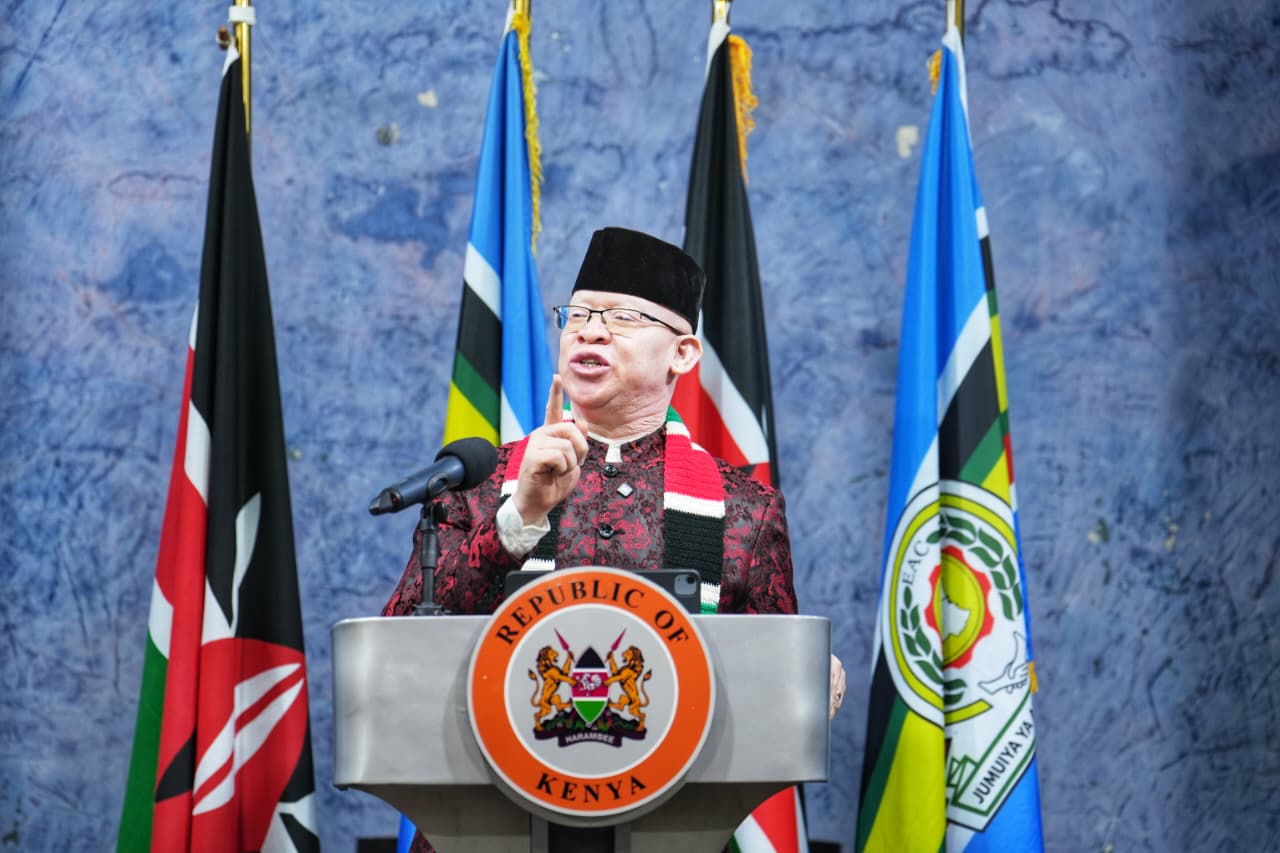
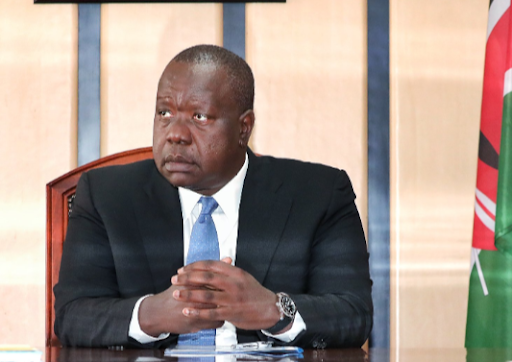
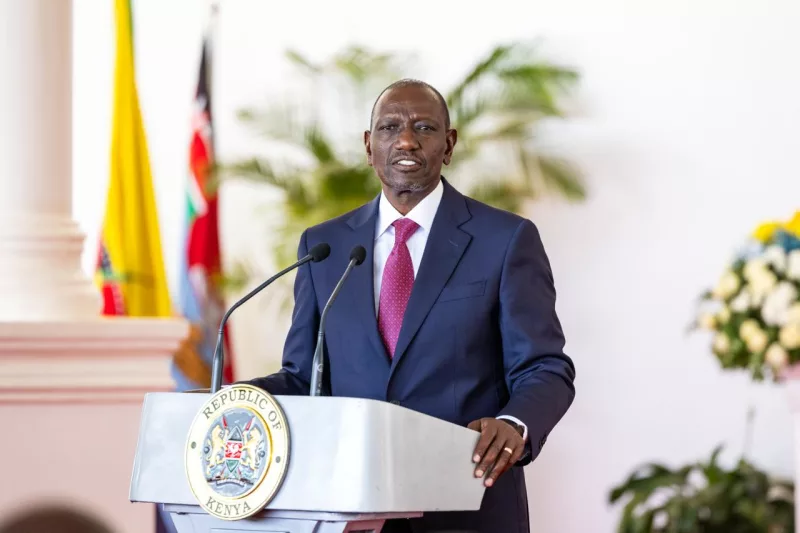 President William Ruto on July 21, 2026. /PCS