

The lion has long been deemed the king of the jungle. I’ve often asked myself why, and I 100 per cent believe that same question has crossed your mind at least once in your lifetime.
After digging through all the information I could find about lions, I realised ‘the king of the jungle’ is not just a mere title. The lions earned it. Their natural demeanour, body physique and a lifestyle that exudes confidence makes a statement for them. And yet, they carry it all with grace, unapologetically.
Lions are carnivores belonging to the big cat family. They live in savannahs, woodlands and scrublands, including national parks and game reserves. About 20,000 to 25,000 lions exist worldwide, with the vast majority in Africa. Despite their numbers, however, lions still stand out among all wild animals.
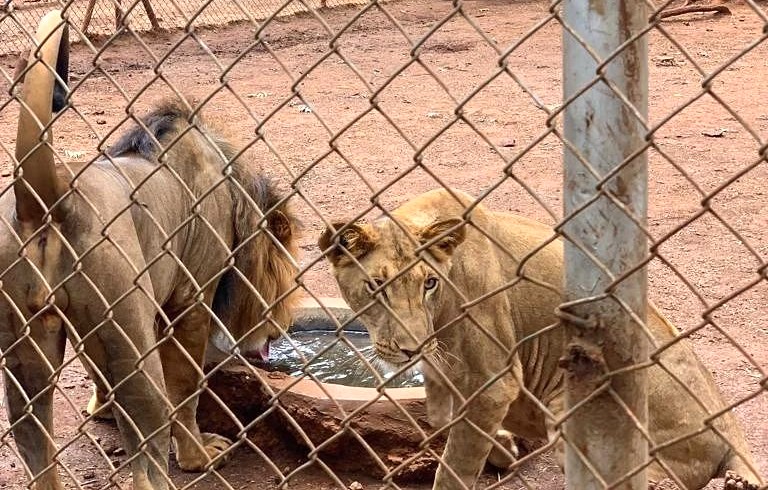
There are various reasons for this. One is lions’ majestic golden mane. No other animal has this feature, and as a result, the mane makes the lion embody a regal presence. The mane grows as a male lion gets older, thus resembling a crown handed to it by default. However, the mane grows darker with age, embodying the phrase ‘ageing with grace’.
The second factor is their social behaviour. These big cats are very social. They live in groups called prides. A pride is what we term a kingdom in layman’s language.
I find it so fascinating how organised they are. Without any laws or supervision, each lion knows its place in the hierarchy and follows the system. Whereas we humans find it so hard to be this organised, even in government. This should definitely be added to the wonders of the world. Don’t you think?
Third is the personality lions embody. Lions rule the wild with boldness and courage. Though they can’t speak like we do, their presence alone is enough to shake the entire ecosystem. Prey such as the antelope and the like run for their lives at the sound of a lion, even though it meant no harm but was simply yawning and basking in the sun. Lions saunter around in a manner that screams leadership material, resilience and a natural go-getter.
The fourth interesting fact about lions is that a lion’s roar is one of the most powerful, distinctive sounds in the animal kingdom. It is a deep, thunderous call that no other animal can replicate. The roar can be heard up to 8km away.
That sound is used to signal occupancy and strength to neighbouring lions and reduce the need for direct physical confrontation. It also promotes pride cohesion, helping pride members locate one another when they are spread across several kilometres. The roar also helps in mate guarding and deterrence, with male lions roaring to warn rival males and signal their continued control over territories that include breeding females.
Both males and females roar, but the lionesses roar to purposely reunite pride members and coordinate movement.
Beyond their physical strength and commanding demeanour, lions hold deep cultural significance across Africa and especially in Kenya. Among the Maasai, for instance, the lion is revered as a symbol of bravery and resilience, with stories, songs and traditions reflecting the animal's esteemed status. That is why today, the Maasai play a key role in protecting lions in national parks and game reserves.
Lions are also a source of national pride in Kenya, drawing thousands of tourists from around the world to iconic wildlife destinations such as Masai Mara National Reserve, Amboseli National Park and Tsavo National Park. They have become ambassadors of Kenya's rich wildlife heritage and a powerful reminder of the country's responsibility to protect its natural treasures.
Perhaps the next time you encounter a lion on a safari, you'll understand that its crown is not made of gold but of the respect it has earned from both the wild and the people who have admired it for generations.