


I lightly refer to myself as the prodigal daughter. I leave home for greener pastures but I always come back. Unlike a real prodigal person, I do not return because I’m broke. Rather, I return to handle many administrative matters that will in turn leave me broke.
I also come home occasionally because I miss the chaos. I miss observing the chaos and reporting on the chaos. Other than the skyline of Mombasa, very little has changed since my youth. The people still act confidently ignorant as they always have. The lores of missing genitals and witchcraft are as old as time. The dense humid weather still turns us into lizards, slow when the weather is bad and slow after stuffing ourselves with huge, spicy meals.
Traffic is a nightmare, worse than any other part of the country. Service is slow. The crushing number of vehicles and tuktuks overwhelm the road expansion. The road construction is giving me PTSD from my university days. Side note: I was in university when Thika Road was being constructed, and I cannot stand to live through another road expansion.
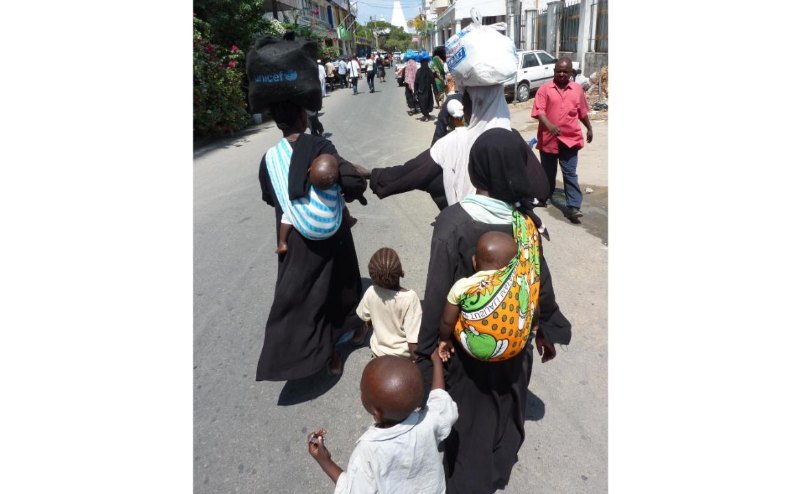
While money flows freely in the bustling economy of the second-largest city in the country, the underside of a thriving economic class is evident as we witness an equally big economic divide between the rich and the poor. Prevalent poverty is evident from the large number of hawkers, idlers, touts and beggars one encounters on the streets.
On one of my rare escapades into the city centre, I sat in the tuktuk, and the first thing I noticed as we waited in the dense traffic — since the streets were cleared for the presidential motorcade — was the alarming number of beggars.
And these are not the ordinary beggars I used to come across back in the day. You know, the older men and women with a certain disability either struggling alone or being pushed by younger children as they sought sympathy in the form of spare change. No, the demographic of beggars has changed. The change is so drastic, the bells in my head started ringing as soon as I saw the first pair.
Disabled beggars are now young boys ranging between the ages of seven and 19. One is in a wheelchair and the other is pushing him. From far, they seem like able bodied young men who should be in school. Up close, the one in the wheelchair would have one disability, but everything else about their physique is that of a growing young man.
Before I could wrap my thoughts around the scene before me, the tuktuk moved a short distance forward and I was met with yet another pair. The incident immediately brought to mind the scene from the film Slumdog Millionaire, where the slum lords took advantage of lost children by maiming them and turning them into beggars for their benefit. This was the only explanation I could come up with as to why seemingly able-bodied young men who appeared to have one glaring disability are crowding the streets in record numbers as beggars. I met several others before I crossed the bridge.
I couldn't help but think, could there really be a cartel that is turning young lads into beggars? Had the people not noticed what took me minutes to figure? What was the county doing about it? The world is cynical and has turned us into skeptics. With that being said, how many of us still give money to beggars?
Most of us understand that being a beggar is being in business. And this is not just a Mombasa problem; the streets of Paris and London are also lined with beggars. If we all agree that beggars are in the business of easy money and we choose not to give them any spare change, why in the world does it seem like the number of beggars on the streets is growing by the day?







![[PHOTOS] Ruto hosts Bungoma delegation at State House](https://cdn.radioafrica.digital/image/2026/07/38c18064-4bd7-4a52-9171-4dcce631a74b.webp)